Young Republicans Emerge in the Political Arena: A New Generation Takes the Stage
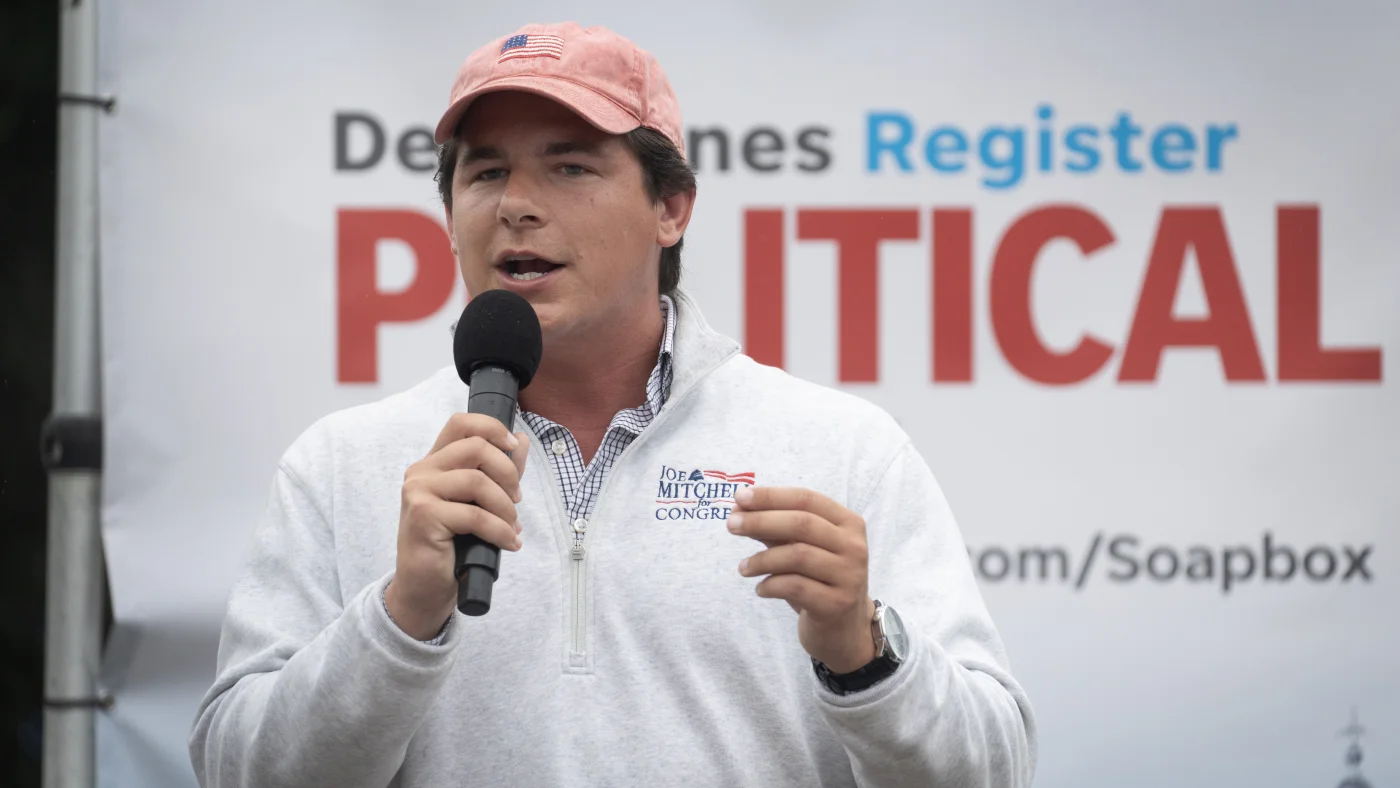
As political landscapes shift, the emergence of Gen Z Republicans into the U.S. Congress is drawing attention. Joe Mitchell, a 29-year-old candidate, is at the forefront of this movement, competing in Iowa’s 2nd congressional district. His campaign is one of the few considered to be a tossup, reflecting the changing dynamics as voter dissatisfaction with President Trump grows and Democrats aim to regain Congressional control.
Mitchell, endorsed by the president, represents a small but noteworthy faction of Gen Z Republicans seeking House seats. Should he succeed, he would join a pioneering group of young conservatives in Congress.
This cohort, though limited in numbers, signifies a potential shift in political participation among younger generations. Mitchell believes that the electorate is eager for fresh leadership, stating, “I think people are looking for hope, regardless of what party they’re in. They want to see young people get involved, and I hear that everywhere we go.”
Mitchell, a former state senator and real estate developer, advocates for a platform appealing to voters across party lines. His policies include implementing term limits in the House and banning congressional stock trading. Additionally, he refuses campaign donations from corporate PACs, emphasizing an “anti-corruption platform.” This approach resonates with younger Americans, who express significant concerns over economic and institutional issues.
Currently, Gen Z representation in Congress is minimal, with Florida Democrat Maxwell Frost being the sole member. However, more candidates are anticipated to join, including Democratic socialist Melat Kiros in Colorado and Republican Michael Alfonso in Wisconsin’s 7th district, both poised for success.
Alfonso, a political newcomer with ties to Sean Duffy, former Transportation Secretary, could become the first person born in the 2000s to serve in Congress. He views his youth as a strategic advantage, as he mentioned in an interview with Wisconsin Public Radio.
The political landscape remains challenging for Gen Z candidates, who make up a mere 4% of Congressional hopefuls. The Future Caucus, a nonpartisan group supporting young officeholders, reports that they are least likely to advance past the primaries.
The Rare Gen-Z GOP Candidate
Young Republicans face an even tougher landscape, with fewer running compared to their Democratic counterparts. The Future Caucus data highlights that most Gen Z candidates align with the Democratic Party, while fewer than a third run as Republicans.
Efforts to bolster young conservative representation are led by organizations like Run Gen Z, founded by Mitchell. Adam Pennings, its executive director, stresses the importance of including young voices in the political arena, stating, “Young people need a seat at the table. Does that mean they need to be the only seat of the table? No. We need to be building up young people who are ready to lead in the future when some of these more, you know, long-term serving people retire.”
Recently, Run Gen Z endorsed over 220 Gen Z and millennial conservatives, including candidates like Mitchell and Alfonso, as well as more longshot candidates such as Riley Owen in Utah.
Voices on the Future of the GOP
The political future is a key concern for young conservatives like Owen, who envision a GOP that values trust, entrepreneurship, and the American dream. Mitchell, back in Iowa, emphasizes an “America First” approach, focused on prioritizing American interests, a stance supported by Vice President JD Vance and others in Trump’s cabinet.
However, the definition of “America First” is debated within the GOP, especially amidst conflicts like the U.S. war with Iran. Mitchell, while not opposing the war, emphasizes that Iran should not possess nuclear weapons and that he does not support “endless wars.”
Mitchell acknowledges varying interpretations of “America First,” asserting that “people can have a number of ways to interpret it.”