Georgia’s Senate Race: Trump’s Election Claims Resonate Among Some, Alienate Others
As the midterm elections approach, former President Donald Trump’s assertions about the 2020 election continue to echo through political campaigns. Despite the ongoing election cycle, the focus on previous disputes over election integrity remains a contentious topic among GOP candidates and voters.
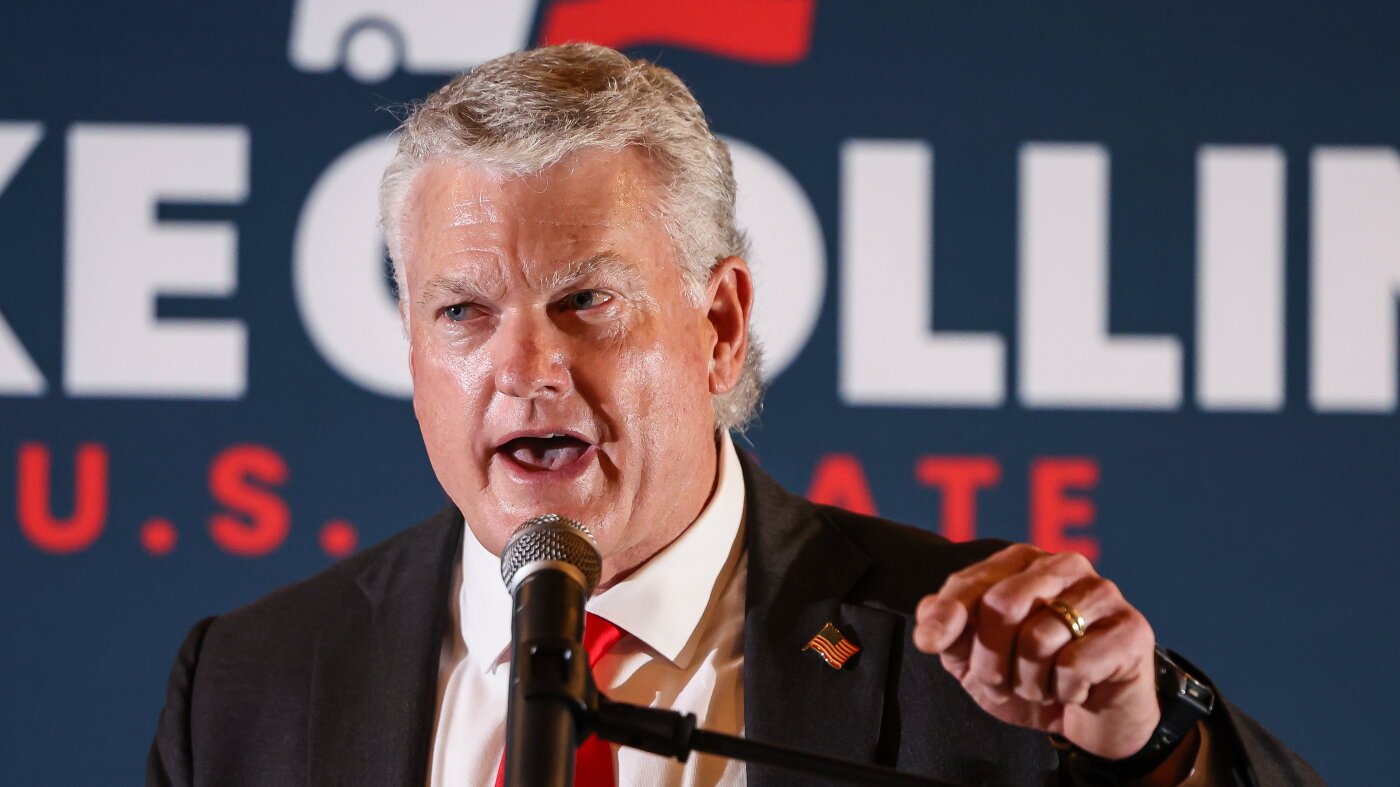
Georgia is a battleground where these dynamics are vividly playing out. Mike Collins, a Republican Senate candidate, has remained steadfast in his support for Trump’s claims. His campaign traces back to shortly after Trump’s controversial attempt to influence Georgia’s election results in 2020.
During his initial congressional campaign, Collins released a campaign ad asserting unfounded claims of Trump’s victory in Georgia and criticized politicians who failed to support Trump’s cause. The ad famously culminated with Collins discharging a firearm at a labeled “voting machine.”
Collins has reiterated his stance that the 2020 election was unjustly taken from Trump and has shown support for compensating individuals prosecuted for their involvement in the January 6 Capitol riot. This unwavering allegiance to Trump’s narrative has caused division among the electorate.
Lynn, a lifelong Republican from Georgia, expressed her concerns about Collins’ focus on past elections. “It bothers me a lot,” she remarked, requesting anonymity for fear of backlash. Her discontent with Collins’ positions has led her to consider voting for Democratic incumbent Jon Ossoff.
Meanwhile, Austin Sapp, another Georgia voter, supports Trump’s voter ID initiatives but wishes for a shift away from past controversies. “It is what it is,” Sapp stated, emphasizing the need for candidates to present future-oriented platforms.
The National Perspective on Election Integrity
A recent poll indicates that only a small fraction of voters prioritize election integrity as their foremost concern. Georgia Secretary of State official Gabe Sterling noted that although election fraud claims remain a potent fundraising tool, they resonate primarily with fervent activists rather than the broader electorate.
Sterling, previously vocal against Trump’s claims, observed that only a dedicated segment of the party still champions these issues. However, some of these activists have secured influential roles on election boards, influencing Republican primaries.
Trump’s Enduring Influence and Its Implications
Trump’s unyielding focus on the 2020 election has sparked debates within the Republican Party. In Michigan, Senate nominee Mike Rogers, who once criticized Trump’s actions, has since echoed unsubstantiated claims about election fraud, illustrating the complex relationship between GOP candidates and Trump’s influence.
Political strategist Jason Roe believes that endorsing Trump’s views is often seen as essential for his support, though it might not be effective in general elections. “Throwing red meat to the base” may energize some voters, but it risks alienating others crucial for electoral success.
These dynamics are evident in Georgia, where Trump’s endorsement decisions have influenced candidate selection, sometimes against more competitive alternatives in general elections. Despite this, Trump persists in citing election integrity as a critical issue, potentially shaping the Republican outlook in upcoming elections.