Iran’s Airspace Closure and Rising Middle East Tensions Prompt Global Reactions
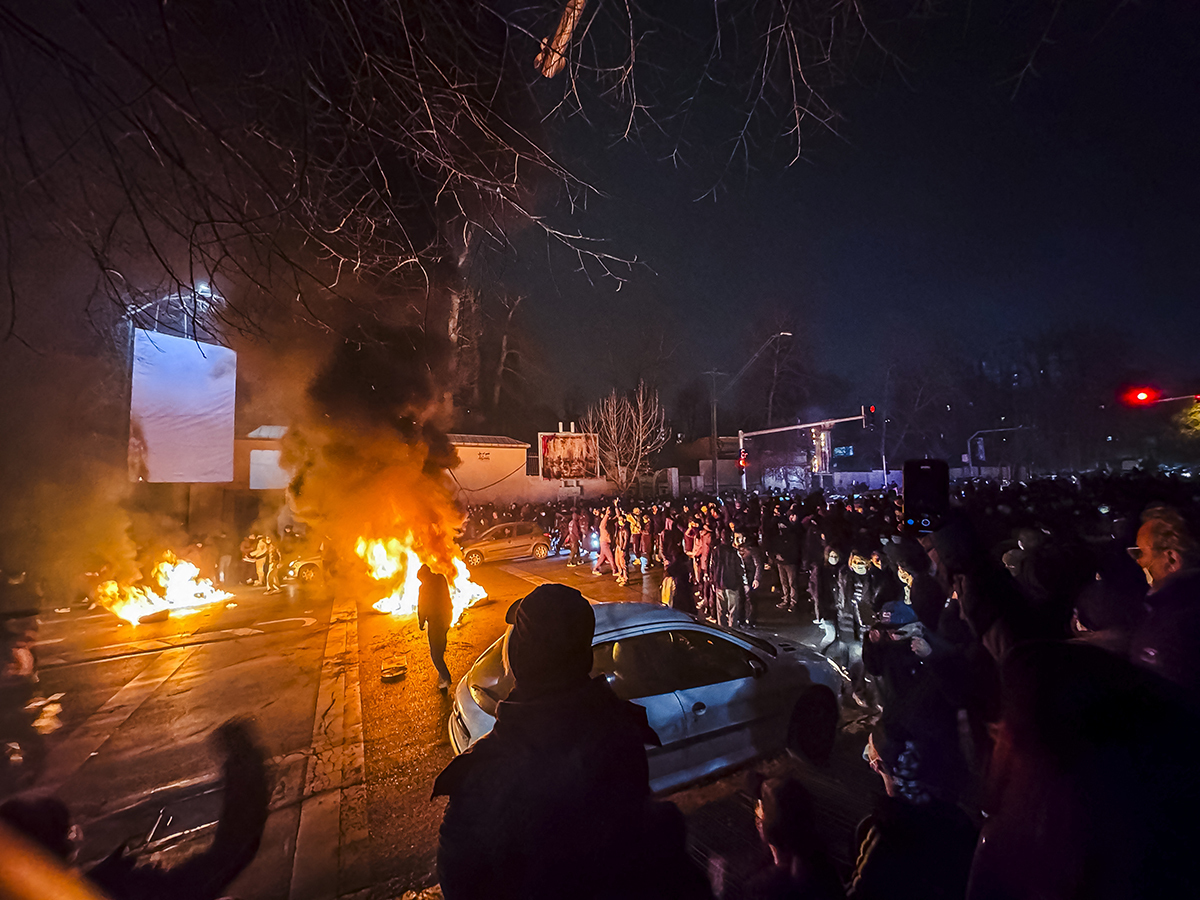
As tensions escalate in the Middle East, Iran temporarily closed its airspace to commercial flights for over four hours, causing international airlines to reroute and raising global concerns. This move comes amid strained relations with the United States due to Iran’s forceful suppression of nationwide protests.
Although the Iranian Civil Aviation Authority eventually reopened the skies and resumed operations, it did not address the initial closure, according to The Associated Press.
Simultaneously, the U.S. Embassy in Qatar advised its personnel to limit travel to Al Udeid Air Base, a key military installation, as a precaution. American citizens were similarly cautioned. Qatar confirmed the move was due to “current regional tensions,” as reported by Reuters.
Al Udeid, the largest U.S. airbase in the Middle East, plays a crucial role in American military operations, hosting thousands of U.S. troops. Previously, the base was targeted by Iran following U.S. strikes on Iranian nuclear sites, highlighted by Ali Shamkhani, an adviser to Iran’s supreme leader.
In response to security threats, Qatar’s international media office emphasized its commitment to citizen safety and infrastructure protection, terming the actions at Al Udeid as preventive measures.
The United Nations Security Council scheduled an emergency meeting at the behest of the United States to deliberate on the unfolding situation.
President Donald Trump, in recent communications, suggested that Iran had paused plans to execute protesters detained during the ongoing demonstrations. Reassuring Iranian citizens, he stated, “help is on the way” and promised appropriate U.S. action.
Iranian Foreign Minister Abbas Araghchi, while discussing potential U.S. interventions, advocated for diplomatic solutions, though he expressed doubts about American sincerity. “My message is: Between war and diplomacy, diplomacy is a better way, although we don’t have any positive experience from the United States,” he told Fox News.
Human rights organizations report that the death toll from Iran’s crackdown on protests has reached at least 2,615, marking it as the deadliest unrest since the 1979 revolution, as per AP. Disturbing footage from Tehran depicts numerous bodies, with many more reportedly missing.
Iranian media confirmed the arrest of opposition activist Erfan Soltani on charges of anti-regime activities, denying any death sentence, as reported by Sky News. Despite initial fears of execution, a family member confirmed Soltani had not been hanged.
The U.S.-based Human Rights Activists News Agency had previously claimed Soltani would be the first to face execution, with the U.S. State Department cautioning about potential subsequent executions. President Trump warned Iran of consequences should they proceed with any executions.
In a related development, Elon Musk’s SpaceX has enhanced satellite internet access in Iran by reducing Starlink fees, allowing more Iranians to circumvent governmental internet restrictions. Activists, cited by AP, mentioned a firmware update to counteract signal jamming. Despite being illegal in Iran, Starlink has enabled the dissemination of protest videos globally.
On Air Force One, Trump expressed plans to seek Musk’s aid for Iranian protesters, a strategy later confirmed by the White House press secretary. However, SpaceX has withheld any official statement.
In a discussion with Reuters, Trump voiced skepticism regarding Reza Pahlavi’s potential to unite Iranian citizens, saying, “He seems very nice, but I don’t know how he’d play within his own country.” Pahlavi, who has lived in exile since before the 1979 revolution, is the son of Iran’s last shah.
Trump speculated on the possibility of the current Iranian regime’s collapse, noting, “Whether or not it falls or not, it’s going to be an interesting period of time.”
This article was originally written by www.christianpost.com