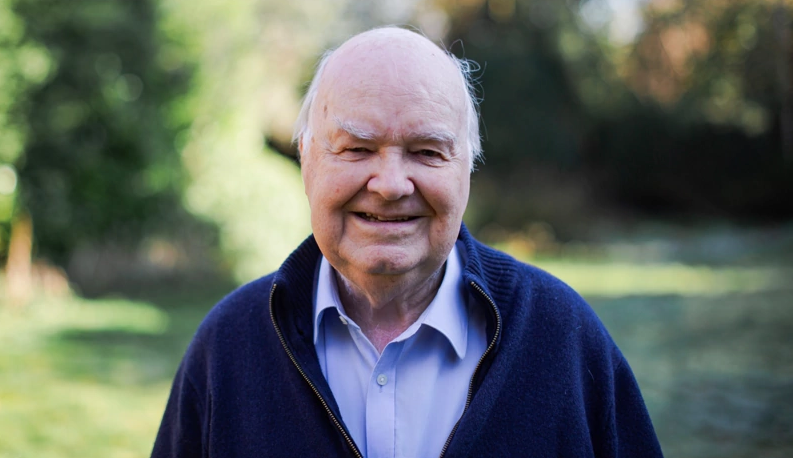
In a world that often encourages individuals to keep their beliefs private, John Lennox, a noted Oxford mathematician and Christian apologist, urges Christians to confidently share their faith. He emphasizes that evangelism should not be confined to the realms of theologians and preachers, but rather, it is a calling for every believer.
During a discussion with Solas, a Christian apologetics group, the 81-year-old Lennox reflected on his extensive experience in defending Christianity and offered practical guidance for believers hesitant about discussing their faith. He spoke with Dr. Simon Wenham about his dedication to spreading the gospel, a mission that began during his time at Cambridge in the 1960s.
Quoting FF Bruce, a biblical scholar, Lennox stated, “The New Testament knows nothing of silent Christians,” and further encouraged, “We may not all be preachers, but we can all share it. We are all called to be witnesses.”
Lennox expressed concern that many Christians may not possess the biblical knowledge required to engage in faith-based discussions confidently. He observed that while individuals often enhance their professional expertise, their understanding of Scripture may remain limited to a “Sunday school level.” This lack of depth can lead to embarrassment and silence, especially in a culture that prizes privacy over open discussions about religion.
The term ‘apologia’, meaning ‘defense’ in Greek, is commonly misunderstood, according to Lennox. He explained that Christian apologetics is not solely for intellectuals fluent in philosophy but is about “defending the truth of the Christian faith and clearing up objections and difficulties that people have with believing it.”
He noted that the Apostle Paul frequently used the term ‘apologia’ to describe his experiences, highlighting that personal experiences are central to apologetics. Lennox said, “No one can take our experience away from us,” emphasizing that every Christian is called to defend their faith.
Lennox encouraged believers to engage with others by understanding their backgrounds and questions, and to approach these interactions with curiosity and humility. He stressed the importance of listening, saying, “Getting to know people and listening to them, it seems to me is a prerequisite that’s almost forgotten.”
Admitting when one does not have an answer is crucial, Lennox advised. This openness can lead to more profound dialogues. He suggested offering to explore challenging questions further and reconvening for discussion. Such honesty demonstrates that Christians do not claim omniscience and that they value others’ inquiries seriously.
He said, “The effect of that can be quite dramatic because the other person learns several things simultaneously. Firstly, that Christians aren’t know-it-alls. They don’t claim to know everything.”
“Secondly, that here’s someone who takes my question seriously enough that they’re prepared to admit that they don’t really have an answer to it, but … they’re prepared to look for one.”
Lennox believes these moments can foster deeper connections and potentially lead others toward faith in Christ. He suggested that Christians share personal testimonies: “What we all can do is to share what Christ has done for us.”
Lennox also identified the workplace as a vital mission field where believers can model their faith, hoping it prompts questions from colleagues. When engaging with atheists and sceptics, he advised against viewing discussions as battles to win. “Winning an argument is one thing but winning the hearts of someone with whom you’re speaking is an entirely different thing,” he remarked.
He encouraged maintaining respect and calmness in every interaction, reminding believers that everyone is made in God’s image. “I think people can learn to respect you in that way,” Lennox said, recommending that Christians take questions seriously and pray for peace in their discussions.
Lennox emphasized that faith must come from “personal conviction” rather than coercion, explaining, “It’s no use browbeating people or trying to.” Providing information to those who lack it can be crucial, as some simply need more knowledge to believe.
Discussing arguments for God’s existence, Lennox expressed his belief that science, especially the mathematical order of nature, “points towards God.” He recalled that some individuals found faith after observing his debates with well-known atheists like Richard Dawkins.
Reflecting on his career, Lennox shared that his primary goals have been to make Christianity accessible through reasoned explanations and to empower believers to share their faith confidently. Ultimately, he stated, Christianity is not merely an intellectual pursuit but a meaningful relationship with Jesus Christ.
“We’re communicating trust in a person, not in a theory,” Lennox concluded. “It’s the idea that Christ is not only the truth, but the way and the life. And that He is the bridge between us and God and can bring us salvation.”
This article was originally written by www.christiantoday.com