Federal Judge Upholds Executive Order on Mail-In Voting Restrictions
In a significant development, a federal judge has chosen not to impede President Trump’s executive order aimed at restricting mail-in voting, leaving the order temporarily intact. This decision underscores the ongoing debate about the extent of presidential authority in the realm of electoral processes.
U.S. District Judge Carl Nichols, who was appointed by Trump, issued the ruling from Washington, D.C. The order in question tests constitutional boundaries concerning the president’s powers and follows a separate 2025 order that was halted by the courts. For more details, view the court ruling.
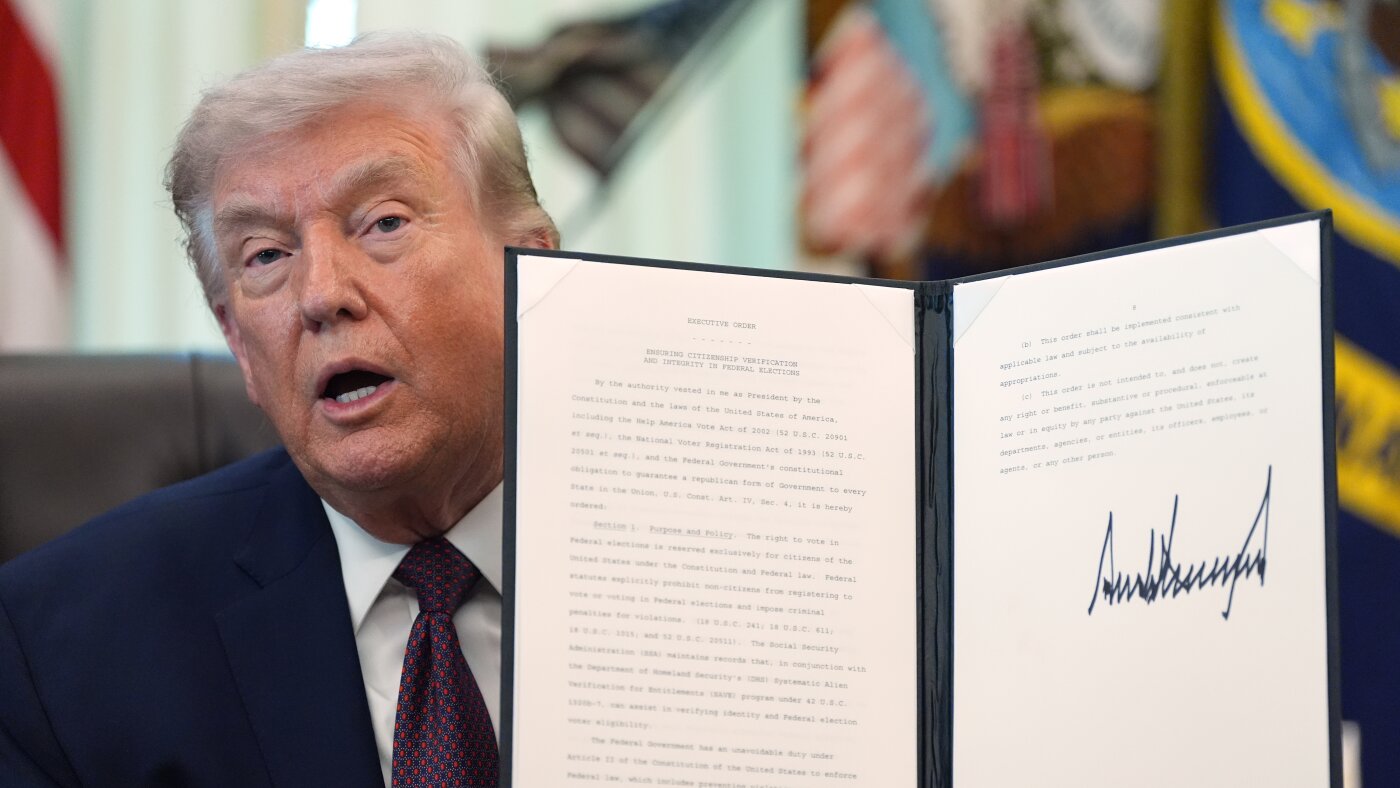
The executive order, issued on March 31, tasks the Department of Homeland Security with collaborating with the Social Security Administration to compile lists of adult U.S. citizens for each state. These lists are intended to be shared with state election officials. Additionally, the order instructs the U.S. Postal Service to identify eligible voters and only deliver mail-in ballots to those on its lists. Read the full text of the executive order.
“The Court recognizes that the Postal Service may ultimately issue a final rule that directly affects Plaintiffs or their members, or that the Government may develop State Citizenship Lists that omit specific individuals due to particularized flaws. Plaintiffs may, of course, renew their motions if and when those future actions occur. Until then, however, Plaintiffs cannot show that preliminary injunctive relief is warranted,” Judge Nichols noted in his decision.
This ruling arrives as another judge prepares to rule on similar lawsuits in Boston. The practical implications of Trump’s order on mail-in voting for state primaries remain uncertain. As of early May, the federal government was still determining how to implement the order, according to a court filing. Acting U.S. Attorney General Todd Blanche informed a Senate Appropriations subcommittee that the Justice Department is coordinating with other agencies to ensure the order’s objectives are met.
Democrats, voting rights organizations, and nearly two dozen states, including Washington, D.C., have launched legal challenges against the order. They argue that Article I of the Constitution assigns the responsibility of setting federal election rules to state legislatures and Congress, not the president. Critics also claim that directing the USPS to establish election mail rules exceeds its authority.
Despite issuing the order to prevent noncitizen voting in federal elections—a phenomenon found to be extremely rare—Trump himself voted by mail in Florida. While mail-in voting is utilized by voters across the political spectrum, more Democrats than Republicans reportedly used this method in the 2024 national election, according to a report.
The D.C. court ruling stems from three lawsuits, while a similar decision concerning Massachusetts-based lawsuits is anticipated in early June.