
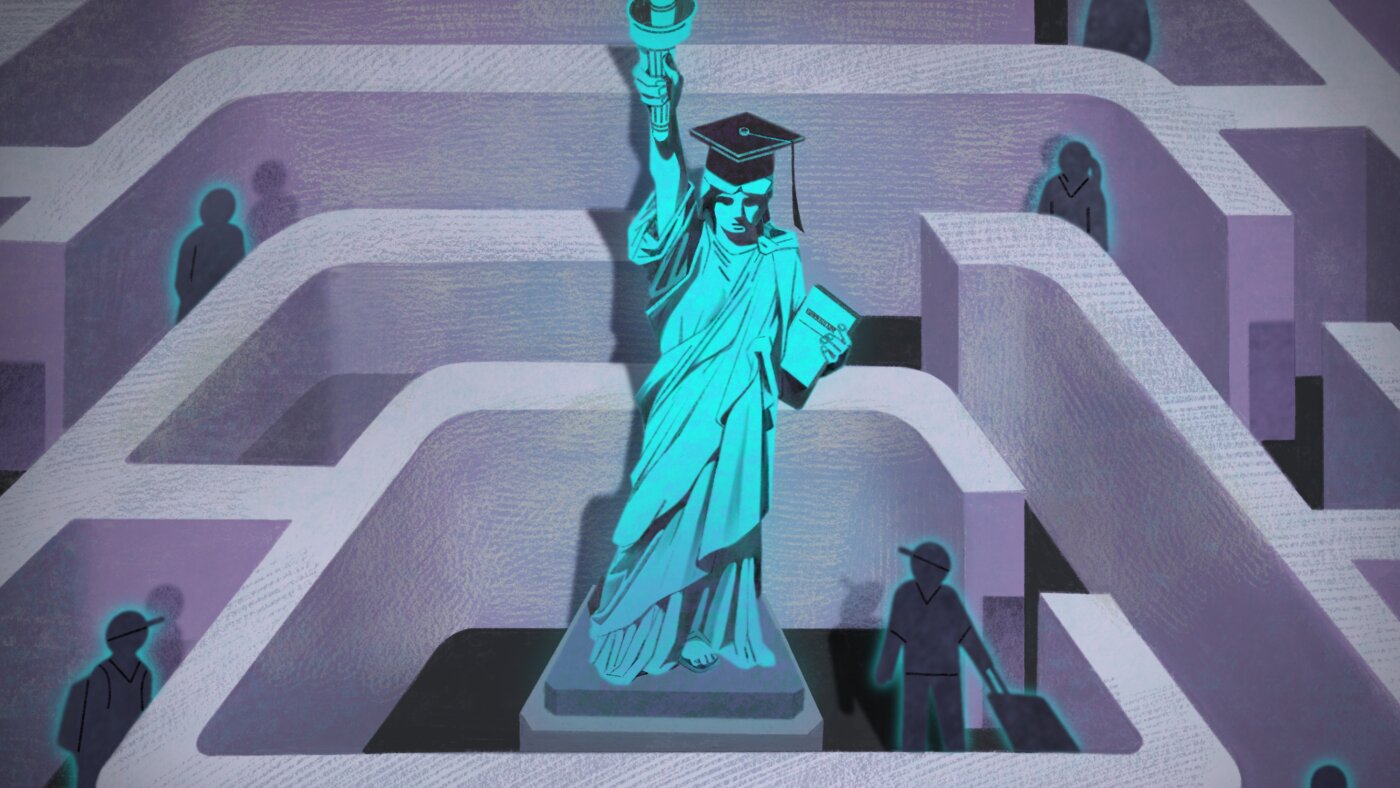
In a move likely to impact international students in the U.S., new visa regulations are being introduced, adding to the ongoing push by the Trump administration to tighten immigration policies. This change comes as a potential challenge for American universities that rely heavily on international students for diversity and financial contributions.
The Department of Homeland Security (DHS) has announced a rule aimed at shortening the duration foreign students can remain in the U.S. By imposing strict time limits on student visas and restricting the ability to transfer schools or change study plans, the goal is to address what DHS sees as intentional delays in completing degrees.
According to a recent announcement, these changes could significantly affect universities, where international students often make up a substantial percentage of the population. These students not only bring diverse perspectives but also contribute financially, as they are typically not eligible for federal aid and often pay full tuition fees. Their presence is also crucial in research and graduate programs, driving American innovation across various fields.
Fanta Aw, executive director and CEO of NAFSA: Association of International Educators, warns of the potential consequences. “What is at stake is frankly the preeminence of American higher education,” she states, labeling the move as “misguided and unnecessary bureaucracy.” She adds, “At a time when there’s increased competition, we continue to shoot ourselves in the foot every single time.”
Origin of the New Rule
This rule change is part of a larger immigration crackdown under the Trump administration. Homeland Security Secretary Markwayne Mullin has justified the rule by citing national security concerns and a need to prevent students from extending their stays indefinitely. “This final rule ensures that foreign students remain focused on their primary purpose: completing their studies and returning home,” Mullin explained in a statement.
Previous guidelines allowed students or scholars on F or J visas to stay in the U.S. as long as they were actively engaged in their academic programs. While DHS emphasizes the need to address what it sees as abuse of the system, data on students purposefully delaying graduation is sparse.
Recent figures from DHS’s overstay report indicate a 2.45% rate of “Suspected In-Country Overstay” among the 1.4 million students and exchange visitors in 2024.
Under the new regulation, most international students will be limited to a four-year stay. Extensions will require applications and fees. Additionally, students will be restricted from changing majors or transferring schools in their first year, and the grace period for post-graduation departure will be cut from 60 days to 30 days, reducing the time available for job hunting and visa status adjustments.
Impact on Enrollment
The new policy will take effect in mid-September, affecting future enrollment as current students have already secured visas for the upcoming academic year. Students on F or J visas will see their visa durations automatically adjusted to four years from the rule’s start date.
There are concerns that these changes could deter prospective international students. U.S. colleges have already reported declines in international student enrollment in graduate programs, attributed to previous travel bans and visa processing issues under the Trump administration.
Critics argue that restricting program switches and major changes undermines a core appeal of U.S. higher education, where students are encouraged to explore diverse academic paths.
University Reactions
The proposal drew over 20,000 public comments, with many universities expressing concerns about the disruptions it would cause. Vanderbilt University’s provost noted the potential challenges for Ph.D. students, whose programs typically exceed four years. “A fixed period of stay would add expense, delay, and uncertainty for nearly every international Ph.D. student and J[-1] research scholar and professor at Vanderbilt University,” the provost wrote.
Oklahoma State University highlighted the impact on longer programs like veterinary medicine, while other institutions detailed the economic and workforce ramifications of the rule.
As universities scramble to adjust, Carnegie Mellon University is planning a town hall to address concerns and provide support for international students impacted by the rule change.
Edited by Nirvi Shah
Visual design and development by LA Johnson




