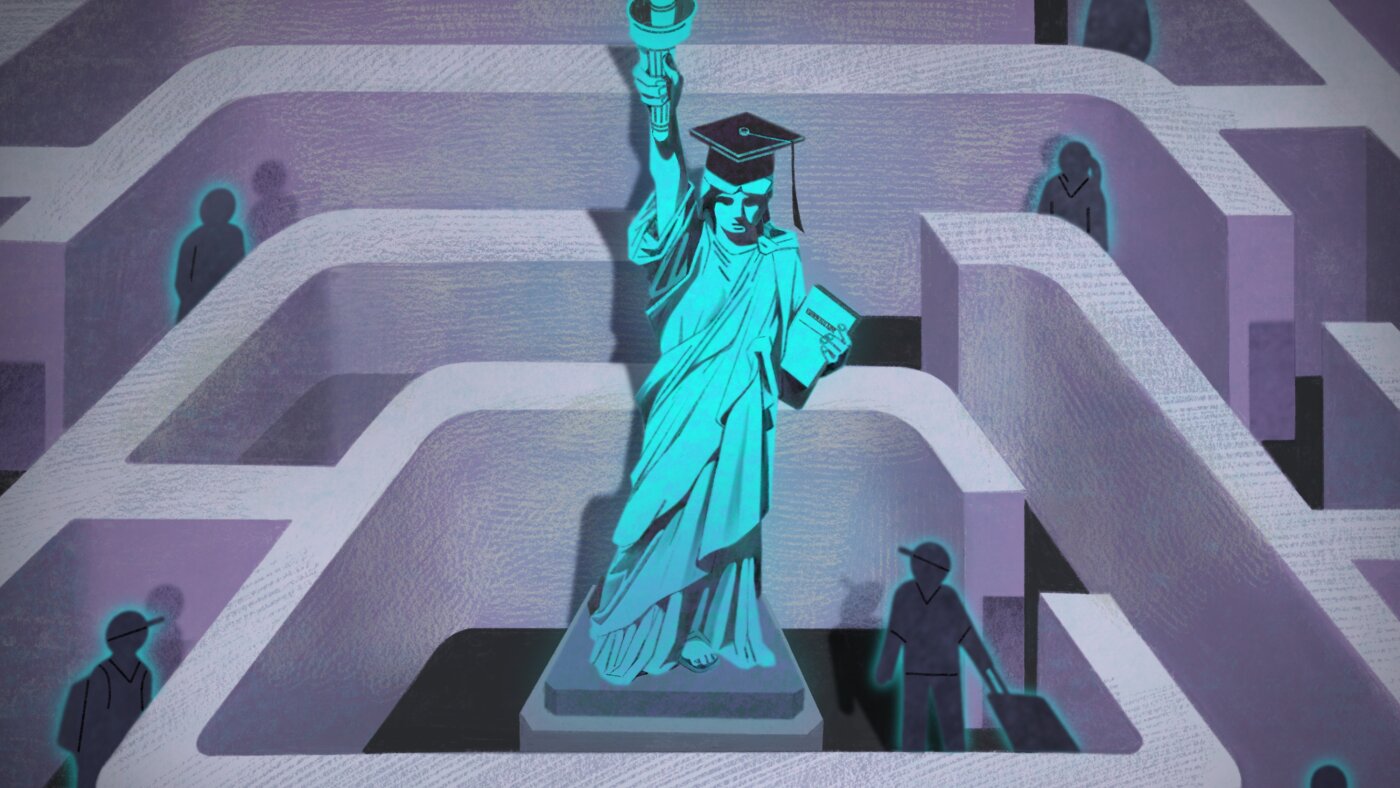
New Student Visa Regulations Could Impact U.S. Higher Education
The latest changes in U.S. visa regulations are raising concerns across American college campuses, as international students may face challenges pursuing their studies in the United States. These changes reflect the Trump administration’s ongoing efforts to tighten immigration policies, potentially conflicting with the objectives of American educational institutions.
The Department of Homeland Security (DHS) has introduced new measures targeting foreign students who are perceived to prolong their academic programs unnecessarily. These measures include imposing strict time limits on student visas and restricting the ability of international students to switch schools or modify their academic plans.
The recently announced rule could significantly influence university demographics, as international students can constitute up to 20% of the student population. These students not only bring diversity and different perspectives but also contribute substantially to the financial health of colleges, given that they often pay full tuition without federal aid. They play a crucial role in American innovation across numerous fields, especially in graduate and Ph.D. programs and research positions.
“What is at stake is frankly the preeminence of American higher education,” remarks Fanta Aw, executive director and CEO of NAFSA: Association of International Educators. She describes the changes as unnecessary bureaucracy that could harm U.S. educational dominance. “At a time when there’s increased competition, we continue to shoot ourselves in the foot every single time.”
Understanding the Changes
The elimination of the “duration of status” rule is part of the Trump administration’s larger agenda to curtail immigration. According to Secretary of Homeland Security Markwayne Mullin, this change aims to enhance national security and reduce the occurrence of “forever students” who allegedly take a prolonged time to complete their degrees.
Historically, students on F or J visas could remain in the U.S. as long as they were progressing in their programs, maintaining full-time enrollment, and staying out of legal trouble. Although DHS cites widespread abuse as the reason behind the rule change, specific data on students deliberately extending their stay is not clear.
The department publishes data on “Suspected In-Country Overstay,” and in 2024, the rate was 2.45% among the more than 1.4 million student visa holders.
Under the new rule, international students will be granted a fixed stay of up to four years. Extensions will require an application and a fee. The rule also prevents students from changing majors or transferring schools during their first year and reduces the post-graduation grace period from 60 to 30 days, leaving less time for recent graduates to secure employment or update their visa status.
Potential Enrollment Impact
Set to take effect in mid-September, this policy change comes after most U.S. fall programs have commenced, meaning current and incoming students will have already secured their visas.
Existing F or J visa holders will see their visas automatically adjusted to a four-year limit from the start date of the rule. However, future enrollment might be affected. Recently, U.S. colleges have experienced declining international student numbers in graduate programs due to previous travel bans and visa processing disruptions, alongside cuts to university research funding.
Critics argue that the new restrictions conflict with a core appeal of U.S. higher education: the flexibility for students to explore, add majors, and discover new interests.
Institutions Express Concerns
The Department of Homeland Security received over 20,000 public comments on the proposed changes, with many colleges fearing significant disruptions. Vanderbilt University’s provost expressed concern about the impact on international Ph.D. students, noting, “A fixed period of stay would add expense, delay, and uncertainty for nearly every international Ph.D. student and J[-1] research scholar and professor at Vanderbilt University,” particularly since the average Ph.D. takes over 5.75 years to complete.
Oklahoma State University highlighted programs like veterinary medicine that extend beyond four years. Other institutions have pointed to potential negative economic and workforce impacts.
As the rule becomes final, universities are working to assess its implications on their operations and student support services. Carnegie Mellon University plans a town hall to address community concerns, emphasizing their commitment to supporting students and scholars through these changes.