Steel City’s Legacy Shines Bright as Pittsburgh Hosts NFL Draft
On the bustling North Shore Drive in Pittsburgh, Amir Grigsby stands near the iconic Acrisure Stadium, fervently discussing the legendary “Steel Curtain” defense of the 1970s. Despite being just 22, Grigsby embodies the rich history of the Steelers’ golden era, a legacy passed down through generations in his family.
Grigsby’s connection to Pittsburgh’s storied past is emblematic of the city’s enduring sports culture, which has produced 16 major professional league championships. “The need to be great is very prominent in Pittsburgh,” he says, capturing the collective spirit of a city that thrives on its winning traditions.
This year, Pittsburgh anticipates drawing between 500,000 and 700,000 fans for the NFL draft, a significant number that nearly doubles the city’s population. The draft, which spans three days, will see 32 NFL teams selecting promising college players to join their ranks.
The Draft Returns to Pittsburgh
Pittsburgh last hosted the draft in 1947, an era when the event was a simple gathering of team owners and coaches at the Fort Pitt Hotel. Today, the draft has evolved into a grand public spectacle, fitting for a city with such a rich sports heritage.
Back in the late 19th century, Pittsburgh was already establishing itself as a sports hub. It was here that professional football began, with the first documented professional player in 1892 (source). The city’s commitment to sports excellence continued through the decades, including the Steelers’ dominance in the 1970s and the Pittsburgh Pirates’ World Series victories.
From Steel Mills to Stadiums
Pittsburgh’s reputation as a “City of Champions” stems from its blue-collar roots, with a work ethic forged in the steel mills of the 19th century. This industrious spirit is reflected in the city’s sports teams, known for their gritty and determined approach.
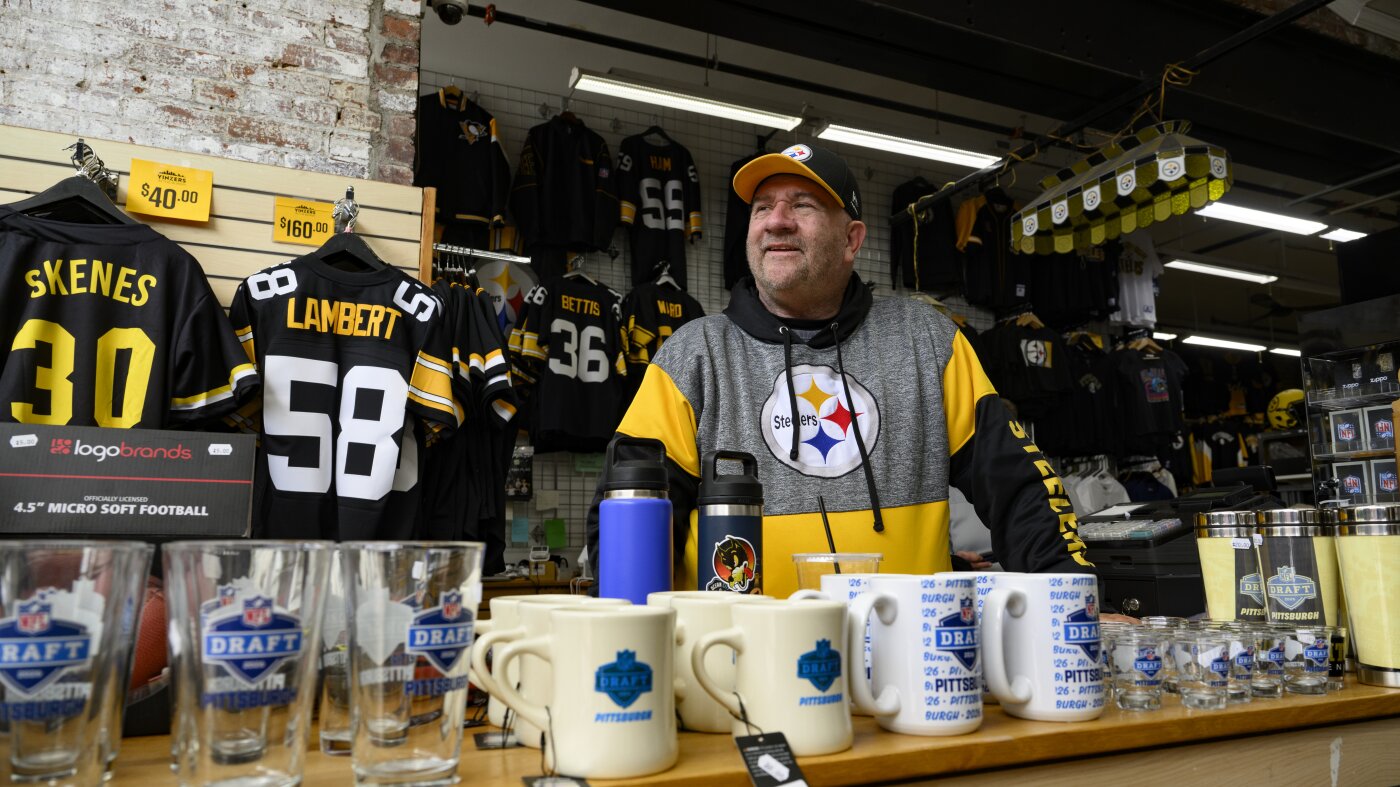
Team founder Art Rooney embodied this ethos, using a horse race bet to secure financial stability for the Steelers. The Rooney family’s legacy continues to uphold high standards, as noted by Jimmy Coen, owner of Yinzers in the Burgh, a local souvenir shop. “If you’re gonna play for the Steelers, you’re gonna be a winner,” Coen asserts.
Even as the steel industry declined in the 1970s and 1980s, sports remained a unifying force for Pittsburgh residents. “Things were rough in Pittsburgh,” Coen recalls. “People were leaving. So that’s all we had was the Steelers.”
The legacy of Pittsburgh sports extends beyond the city, with fans like Albert Martinez traveling from Houston to attend the draft. His connection to the Steelers, inherited from his mother in Monterrey, Mexico, highlights the global appeal of Pittsburgh’s black and gold.
The Future of Pittsburgh Sports
Pittsburgh Mayor Corey O’Connor attributes the city’s enduring sports reputation to the shared experiences of winning across generations. While the most recent championship was the Penguins’ victory in 2017, the city remains optimistic for future triumphs.
As Grigsby confidently puts it, “We’re just waiting for time to catch back up again. History repeats itself, that’s how it goes.”
This article was originally written by www.npr.org