Princess Moss Takes the Helm at NEA Amidst Education Challenges
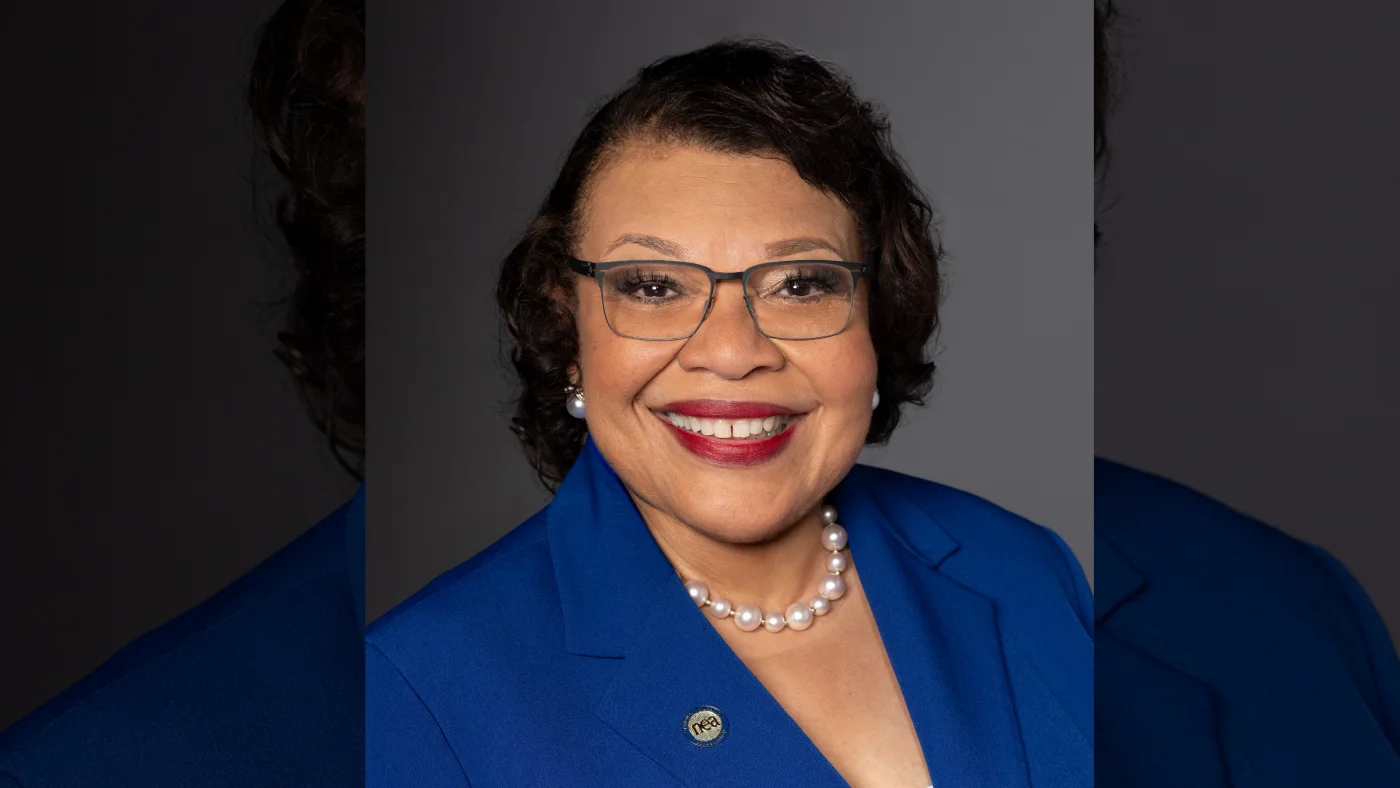
Longtime music teacher Princess Moss was elected as president of the nation’s largest labor union, the National Education Association, over the summer and took the reins in September. The National Education Association
As the public education system navigates turbulent times, Princess Moss has stepped into her role as president of the National Education Association, the nation’s largest labor union. With inflation straining school budgets, and a new federal education tax credit poised to divert funds to private institutions, Moss leads at a critical juncture.
The NEA, with its 3 million members, faces significant challenges. “Public education is under attack,” Moss asserts, emphasizing the union’s commitment to defending the democratic foundation that public education represents.
Her strategy, termed “resistance to renaissance,” aims to prioritize professional autonomy and community engagement, while charting a new political course for the NEA. “I want us to become our own political authority,” she declares, distancing the union from traditional party alignments.
“I know this can work because I’ve done it before”
Growing up in rural Virginia, the daughter of school bus drivers, Princess Moss was inspired by educators like her second-grade teacher, Lucy T. Lewis. Moss recalls Lewis’s encouragement, even when she faltered, as pivotal in shaping her educational journey.
She devoted over two decades to teaching music at the elementary level before ascending through union leadership ranks, including a stint as president of the Virginia Education Association. Moss now confronts a politically charged environment in her three-year term as NEA president.
“We are the experts,” she emphasizes, advocating for educators’ involvement in key decision-making processes. Her experiences in Virginia, where she built bipartisan support for education, inform her current approach.
In Virginia, with a Democratic governor and a Republican legislature, Moss successfully forged coalitions, underscoring that public education transcends partisan lines. As midterm elections loom, she applies this philosophy nationally.
“Talk about your students”
Moss encourages NEA members to focus discussions on student needs, avoiding partisan divides. “Talk about your students. What do your students need?” she advises, steering clear of labeling issues as Democratic or Republican.
Michael Petrilli of the right-leaning Fordham Institute questions this shift, noting the NEA’s historical Democratic alignment. However, with Democrats poised for electoral gains, Petrilli acknowledges the potential for unions to influence education policy significantly.
Despite criticism from some Republicans, Moss remains committed to fostering broad support for public education. “The bottom line is that we will work with those who want to put public education first,” she states, prioritizing educational goals over political affiliations.
Edited by Nirvi Shah
Audio story produced by Lauren Migaki