
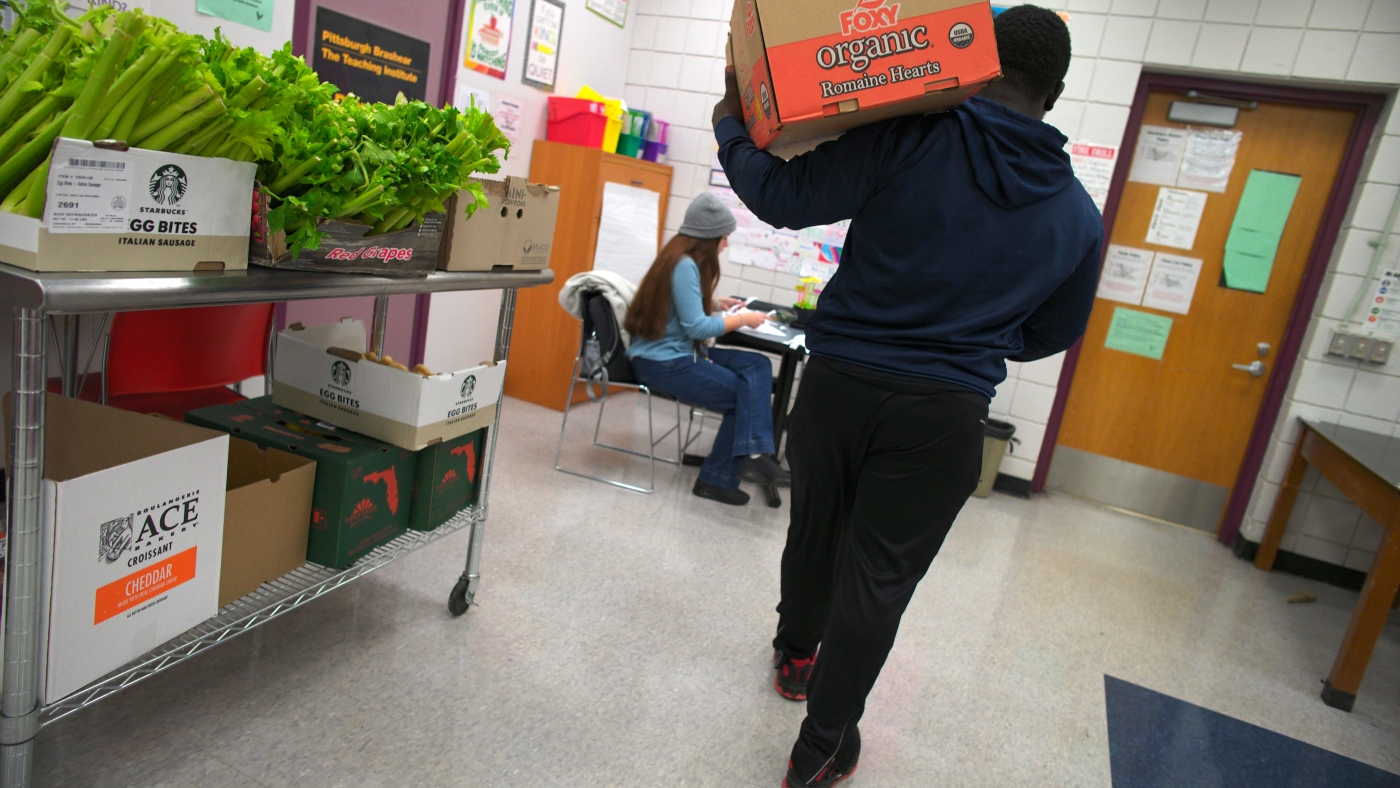
Brashear High School Pantry Steps Up During SNAP Uncertainty
In the midst of a federal shutdown affecting millions of families’ access to SNAP benefits, Brashear High School in Pittsburgh has seen a significant increase in demand at its student food pantry. This essential resource provides groceries and hygiene products to students in need.
Last Friday, the school’s pantry was bustling with students like Ryan, whose family depends on SNAP benefits, which were disrupted by the ongoing government shutdown. “My mom said try and get some food to help out the family, so that’s what I’m doing today,” Ryan explained.
Ryan, a high school junior, discovered the pantry only recently after the school sent out notifications about available resources. He expressed gratitude for the initiative, saying, “I’m glad that they’re doing this. It’s a very big help for families.”
Over the past weeks, nearly 42 million Americans who rely on SNAP benefits have faced uncertainty. The program supports almost 40% of individuals under 18. A court order enabled Pennsylvania to issue full benefits temporarily, but the USDA later deemed those payments “unauthorized” and called for their recovery. Pennsylvania is among the states contesting this directive in court.
Roberta, Ryan’s mother, expressed her apprehension about spending the SNAP funds due to the ongoing legal disputes. She referred to the school pantry as a “godsend” during this challenging period.
“If you’re not fed, you’re not learning”
The pantry at Brashear, part of the national Feeding America network, operates once a week, allowing students a short shop time to gather essentials. The initiative addresses both hunger and education, as health teacher Christine Wolski explained, “If you’re not fed, you’re not learning.”
Interest in the pantry surged as the SNAP-related uncertainties grew. Initially, 146 students had registered to utilize the pantry; by November 11, that number had increased to 224 students, serving over 1,233 household members.
Students like 12th grader N. also benefit from the pantry, which provides fresh produce and other essentials. N. chooses items his family prefers, including spaghetti squash and pasta sauce, to avoid waste. For families like his, reliant on SNAP, the pantry fills a crucial gap as they await the resolution of SNAP payments.
The situation remains tense for these families, who must wait for either government action or the resumption of SNAP payments to stabilize their access to food.




