School Lunch Programs Face Challenges Amid New Dietary Guidelines and Funding Cuts
With the rise of social media, students are demanding more appealing school meals, moving beyond the traditional, uninspired offerings of the past. In Malvern, Pennsylvania, the Great Valley School District is at the forefront of this shift, adapting to changing expectations while grappling with budget limitations.
Nichole Taylor, the supervisor of food and nutrition services at the district, has noted the influence of platforms like TikTok on students’ culinary preferences. “I don’t have a TikTok account, but they’re telling me, ‘Hey, I saw this on TikTok. Can you make this? Can we do this?'” Taylor remarked, highlighting the increased engagement and expectations from today’s students.
Since assuming her role a year and a half ago, Taylor has been working to revitalize the district’s meal offerings, aiming to cook more fresh food from scratch. However, fiscal challenges and a shortage of skilled labor remain significant obstacles. The district is now bracing for potential cost increases following the Trump administration’s recent overhaul of national dietary guidelines.
Impact of New Dietary Guidelines
In January, new dietary guidelines were introduced, emphasizing the reduction of processed foods and the inclusion of “high-quality, nutrient-dense” proteins in meals. Health Secretary Robert F. Kennedy Jr. announced these changes, which are part of the Make America Healthy Again initiative. These guidelines directly impact schools participating in federal meal programs, which must adhere to them.
Many schools, including those in Taylor’s district, rely on processed foods due to budget constraints, with protein already being the most expensive component of their meals. The U.S. Department of Agriculture’s reimbursement rates for the current year are approximately $4.60 per meal for students eligible for free lunches, $4.20 for reduced-price lunches, and $0.44 for full-price lunches, according to the School Nutrition Association (SNA).
Agriculture Secretary Brooke Rollins emphasized the importance of these guidelines for improving child nutrition, stating, “Right now, that is going to be the single most important, from my perspective, move forward — is the school lunches and making sure that we’re getting the right amount, the best amount and the most nutrient-dense foods into the schools.”
However, some experts have criticized the new food pyramid, specifically its emphasis on saturated fats like red meat and full-fat dairy. Christopher Gardner, a nutrition expert from Stanford University, commented that the guidelines “go against decades and decades of evidence and research.”
Funding Cuts for Local Food Purchases
While the administration encourages healthier eating, it has simultaneously cut funding for programs that facilitated the purchase of local foods by schools. The USDA concluded the Local Food for Schools Cooperative Agreement Program, eliminating around $660 million in funding. This program allowed schools to buy minimally processed foods from local producers.
Stephanie Dillard, SNA president, expressed concern over the funding cuts, saying, “That was a big loss because we lost the money we could spend on local farmers.”
Striving for Better School Meals
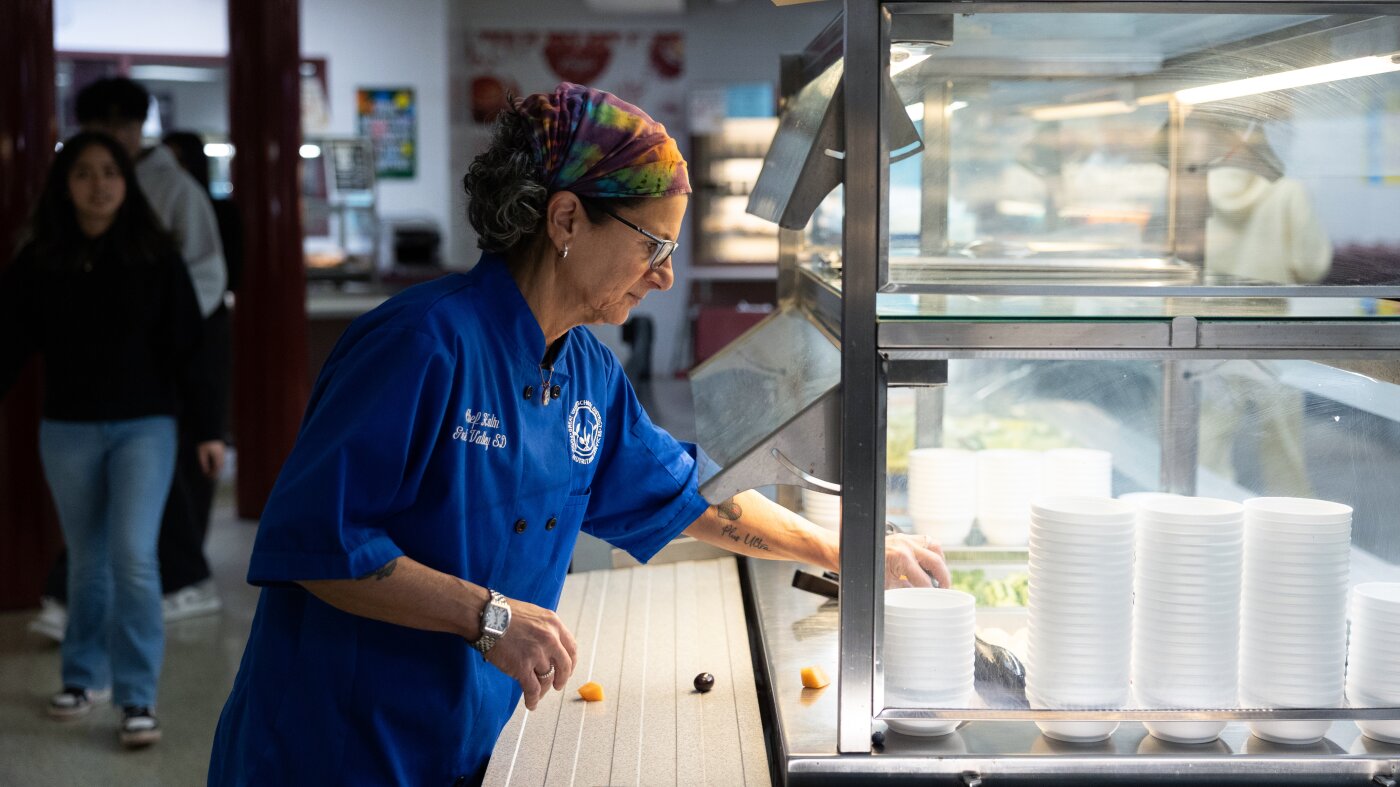
Despite the challenges, many schools continue to explore ways to improve their meal programs. The Great Valley School District recently hired a chef to help transition to fresher ingredients and train staff in new cooking techniques. Jenifer Halin, the district’s culinary coordinator, has already moved from using precut frozen vegetables to fresh ones, noting the simplicity of the shift.
Students have responded positively to these changes, with Great Valley High School senior Varun Kartick praising the fresher options and the introduction of vegetarian dishes upon request. The district’s efforts aim to ensure that more students have access to nutritious meals, which Taylor believes is critical for their academic success.
Taylor stated, “If a kid is hungry, they’re not studying. They can’t learn. They’re acting out. But if you build this into part of their school day to where they feel like this is the norm for them, then you’ve knocked down that hurdle.”