
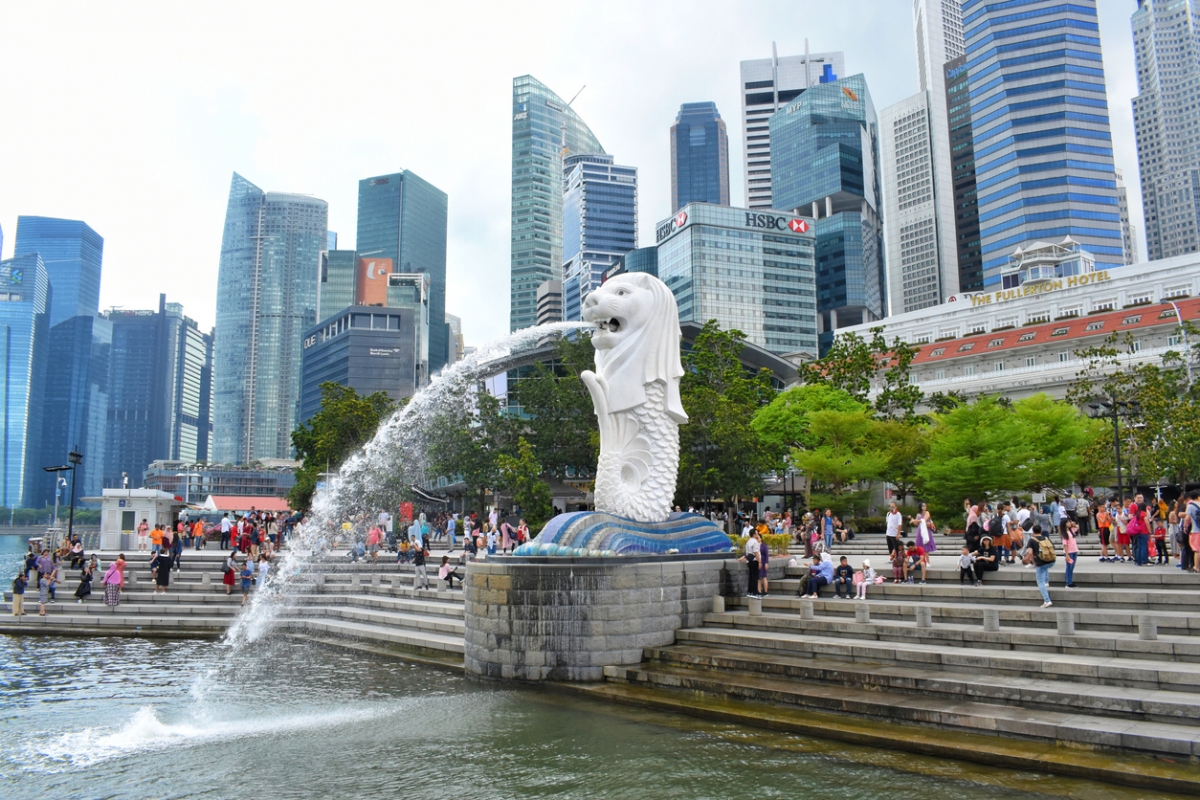
Singapore Tops Global Religious Diversity Index, UK Shows Unique Plurality
(Photo: Getty/iStock)
A recent study by the Pew Research Center reveals that Singapore stands as the most religiously diverse nation globally, while the UK is noted for its religious plurality. This comprehensive research evaluated religious diversity across 201 countries and territories through the Religious Diversity Index (RDI), which considers the distribution of seven major religious groups: Christians, Muslims, Hindus, Buddhists, Jews, other religions, and the unaffiliated.
Singapore achieved a remarkable RDI score of 9.3, indicating a near-equal representation of various faith groups. The population comprises 31% Buddhists, 20% unaffiliated, 19% Christians, 16% Muslims, 5% Hindus, with 9% adhering to other religions. Notably, no country achieved the perfect score of 10.
Suriname ranked second, distinguishing itself as the only Latin American country in the top 10. Its population primarily consists of Christians (53%), with significant Hindu (22%) and Muslim (13%) communities, and an 8% unaffiliated group.
High-ranking nations in religious diversity are predominantly located in the Asia-Pacific and sub-Saharan Africa, including Taiwan, South Korea, Mauritius, and Benin. France is the sole European nation in the top 10, with Christianity (46%) and the unaffiliated (43%) as the largest groups.
In contrast, countries like Yemen, Afghanistan, and Somalia are among the least diverse, with Muslims comprising over 99.8% of their populations.
The UK, although not among the most diverse, is one of seven countries where no religious group holds a majority. The others include South Korea, France, Australia, Singapore, Mauritius, and Ivory Coast. Recent UK Census data indicates Christians now make up less than half the population in England and Wales at 46.2%, down from 72% in 2001. Meanwhile, 37.2% are unaffiliated, and Muslims have grown from 4.9% in 2011 to 6.5% in 2021.
Research suggests around 40% of Britons raised Christian no longer identify with the faith, with 58% of those who attended church as children now considering themselves non-Christian. This trend is part of a broader shift in Western Europe.
Despite declining institutional affiliation, some Christian denominations, such as Pentecostal and Orthodox, are experiencing growth, driven by younger populations and immigrants.
The US ranks 32nd in overall diversity but leads among the world’s largest countries by population. In 2020, 64% of Americans identified as Christian, while 30% were unaffiliated. Other religious groups, including Buddhists, Muslims, Jews, Hindus, and others, collectively make up the remaining 6%.
As the Christian majority declines, the US has become more religiously diverse over the past decade. Pew’s earlier research highlighted that for every adult adopting a religion, three leave, with Christianity facing the largest losses.
Globally, Christianity remains the largest religion with 2.3 billion followers, but its global share has fallen to 28.8%. The unaffiliated now number 1.9 billion, and Muslims, at 2 billion, are the fastest-growing group.
Pew’s findings show that most countries remain religiously homogeneous. In 194 of the 201 nations studied, a single religious group constitutes at least half of the population. Only 49 countries have three or more religious groups each accounting for at least 5% of the population.
The Asia-Pacific region is the most diverse (8.7), while the Middle East and North Africa are the least (3.1), predominantly Muslim. Most of the world’s people live in countries with moderate religious diversity, with only 1% in highly diverse places like Singapore.
Global religious diversity levels remained stable from 2010 to 2020, though 24 countries saw changes, mostly due to disaffiliation, particularly among Christians in Europe, North America, and Australasia. The rise of the unaffiliated in the Netherlands and New Zealand has altered the belief landscape, while Christianity grows in sub-Saharan Africa, now home to the largest share of the world’s Christians, surpassing Europe.
The data depicts a world where religious identity is potent yet increasingly dynamic, especially in Western societies, marking a historic shift in the UK from a clear Christian majority to a pluralistic society.
This article was originally written by www.christiantoday.com




