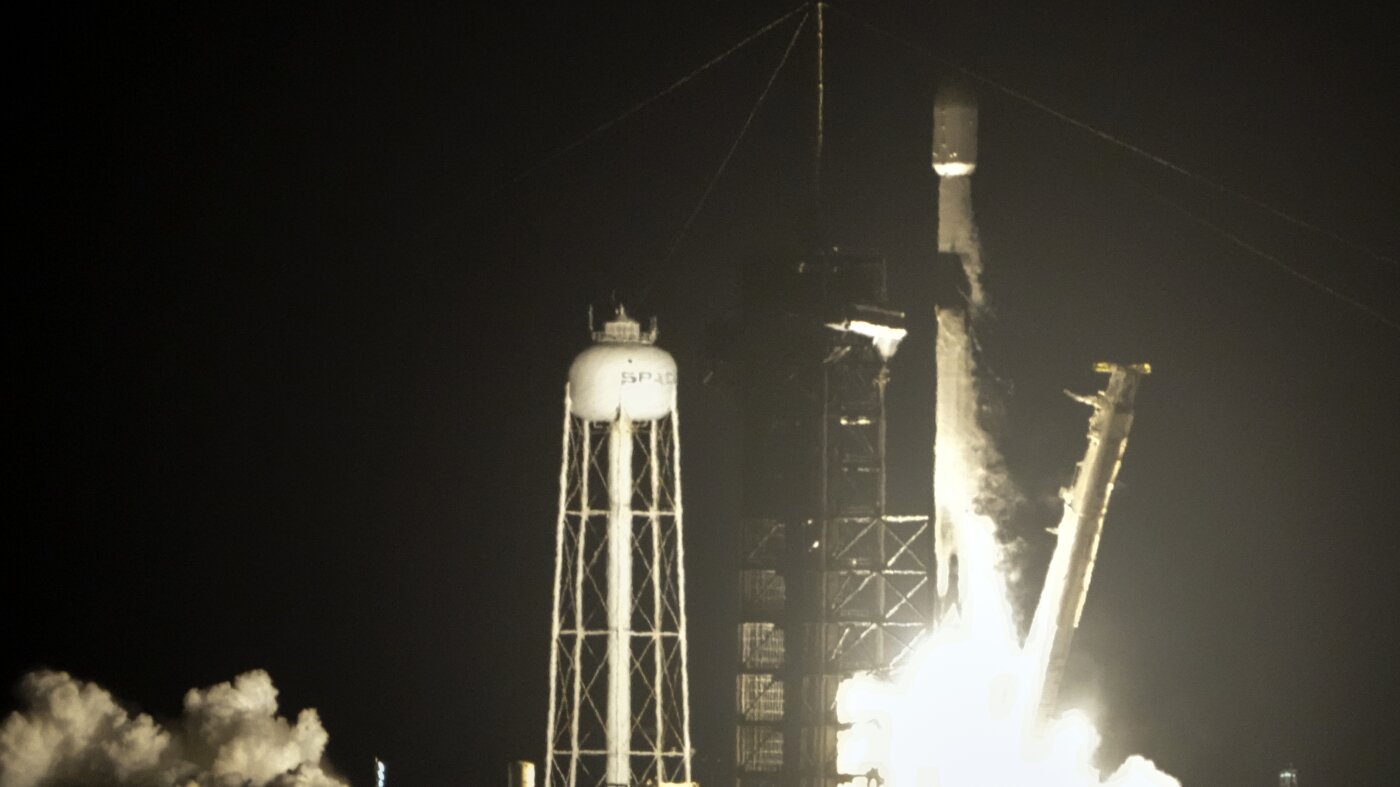
SpaceX Rocket Fragment Set to Impact Moon at High Speed
A piece of a SpaceX Falcon 9 rocket is anticipated to collide with the moon, marking a significant event in space exploration. This incident, expected to occur on Wednesday, underscores the complexities of managing space debris and the unexpected journeys of space-bound equipment.
According to scientists, the Falcon 9 rocket fragment will impact the lunar surface at approximately 2:35 a.m. ET. Traveling at a velocity exceeding 5,000 miles per hour, the object is believed to be part of the rocket’s upper stage and measures roughly the size of a five-story building. Bill Gray, renowned for his expertise in tracking space objects, has provided an analysis predicting this impact.
This particular piece belonged to a Falcon 9 rocket launched in January 2025, which was tasked with delivering two lunar landers and various scientific instruments to the moon. The object is expected to strike the moon’s sunlit side visible from Earth, specifically near the northwestern region close to the Einstein Crater. The impact is projected to create a crater at least 17 meters in diameter.
Despite the impending collision, SpaceX did not plan for this part of the rocket to crash into the moon, as reported by the Associated Press. Attempts to reach SpaceX for comment by NPR have not yet been successful.
NASA’s Lunar Reconnaissance Orbiter (LRO) will be closely observing the incident. Brent Garry, a project scientist at NASA Goddard Space Flight Center, stated that the orbiter will fly over the impact site before and after the collision, aiming to assess any changes to the lunar surface. “After the impact, we might have a little bit more knowledge of where it is. We can do some additional targeting about a week after the impact and get some targeting over where the site is,” Garry noted during a NASA Solar System Exploration Research Virtual Institute (SSERVI) discussion in June.
While the impact itself might not be directly visible, there is speculation that debris such as rocks might form a “plume” that could be observed against the moon’s dark backdrop. Bill Gray mentioned that visibility remains uncertain, stating, “As with much in science, the answer is ‘we don’t know; let’s find out’….Maybe we’ll see rocks ejected from the crater.”
Some researchers, including Ben Fernando from Los Alamos National Laboratory, express that while observing the event may be challenging, it remains a rare opportunity for scientific discovery. “Given these are so rare, I would encourage people who are interested and aware of the risks to take a look,” Fernando advised. However, he cautioned that this is not something visible with binoculars, but with the proper equipment and timing, it could be worthwhile.
This article was originally written by www.npr.org