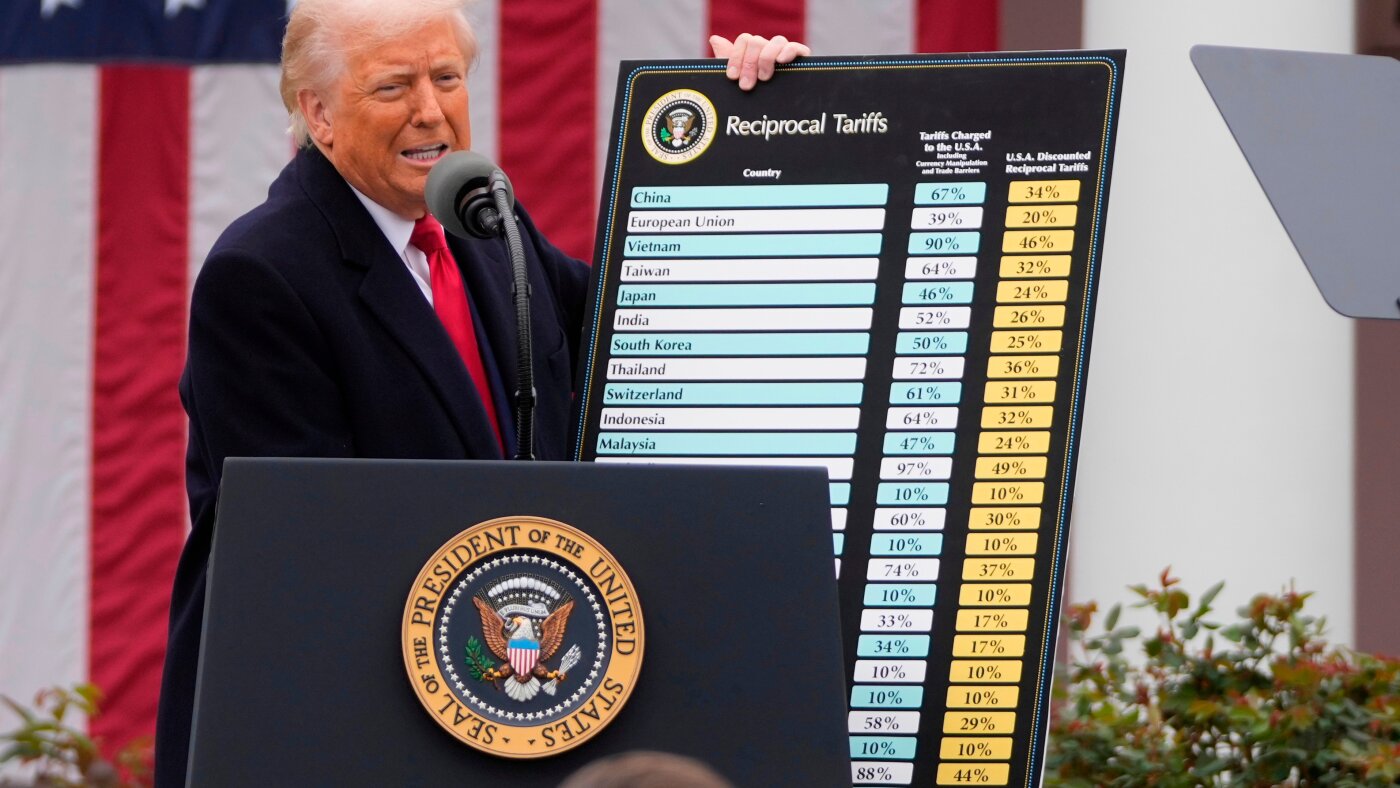
Trump Administers New Tariffs Amid Global Trade Tensions
As the clock ticks down on temporary levies, President Donald Trump has introduced fresh tariffs targeting numerous U.S. trading partners. This move comes on the heels of a Supreme Court decision striking down his earlier tariff strategy.
The U.S. is set to implement import taxes ranging from 10% to 12.5% on goods from 60 nations, which together account for the vast majority of American imports. The administration argues these countries have failed to enforce prohibitions against products made with forced labor.
“The United States has had a forced labor import ban for nearly a century, and rigorously enforces it; it’s well past time for our trading partners to do the same,” stated U.S. Trade Representative Jamieson Greer. He emphasized that the new tariffs aim to address both human rights abuses and unfair trade practices, hoping to enhance worker welfare globally.
The tariffs will replace the expiring temporary 10% global tariffs, which Trump had initially resorted to after a Supreme Court ruling in February. The new tariffs derive authority from Section 301 of the Trade Act of 1974, allowing for sanctions against “unjustifiable,” “unreasonable,” or “discriminatory” trade practices—a tool Trump previously used against China.
The U.S. Trade Representative is also investigating 16 countries, representing a significant portion of U.S. imports, for potentially overproducing goods and affecting American market competitiveness. However, this inquiry is still underway.
Despite the Supreme Court’s rejection of tariffs under the 1977 International Emergency Economic Powers Act (IEEPA), Trump has pursued high tariffs, claiming they address a national emergency caused by the U.S. trade deficit. Following the court’s decision, the administration was compelled to refund importers who had paid these tariffs.
These new tariffs, initiated last month, have already led some countries to strengthen their measures against forced labor, resulting in reduced tariffs. For instance, India’s tariff was lowered from an anticipated 12.5% to 10% due to recent policy changes.
Exceptions to the tariffs include key products like oil, gas, and fertilizer, as well as items exempt under the US-Mexico-Canada Agreement. Domestically, companies importing foreign goods bear the tariff costs, often passing them on to consumers, which could impact the upcoming midterm elections amid existing economic concerns.
Human rights advocates recognize the potential impact of these tariffs on combatting forced labor but express skepticism about their motives. The International Labor Organization reports that 27.6 million people were victims of forced labor globally in 2021.
“We’ve gone on record for years now advocating for import bans, not as a magic bullet, it’s not a silver bullet, but as a potentially effective tool in combating forced labor across the globe,” said Martina Vandenberg, founder and president of The Human Trafficking Legal Center.
While some critics question the efficacy of blanket tariffs, Vandenberg suggested a phased implementation to allow countries time to develop enforcement mechanisms.
The Uyghur Forced Labor Prevention Act remains a significant U.S. legislative measure against forced labor, highlighting labor trafficking and forced labor issues. However, experts like Kenya Davis and Isabelle Glimcher urge a comprehensive approach with transparent investigations and support for countries enforcing bans.
Notably, some countries, including India, have responded by amending trade policies to include forced labor bans, with upcoming European Union regulations also expected to play a role in global trade dynamics.