
The White House has announced that $4.9 billion in foreign aid funding, already approved by Congress, will go unspent. The decision relies on a rarely used budgetary maneuver known as a pocket rescission, which effectively allows the executive branch to prevent spending without a direct vote by lawmakers.
A pocket rescission occurs when the president sends Congress a request to cancel funds close to the end of the fiscal year. Under the 1974 Impoundment Control Act, Congress normally has 45 days to either approve or reject a rescission. But if that request is made late enough in the fiscal year, lawmakers cannot act before September 30, when unspent funds automatically expire. In practice, the timing guarantees that the money lapses before Congress can intervene.
This is the first time in nearly five decades that a president has used the tool. The last known use was in 1977. While technically permitted under the Impoundment Control Act, experts warn that repeated use could allow the White House to sidestep Congress’s constitutional authority over federal spending, weakening the legislative branch’s “power of the purse.”
The $4.9 billion at stake comes from the budgets of the State Department and the U.S. Agency for International Development (USAID). Both have been regular targets of proposed cuts. Earlier this year, Congress approved $9 billion in rescissions after a formal request, rolling back funding for public broadcasting and foreign aid.
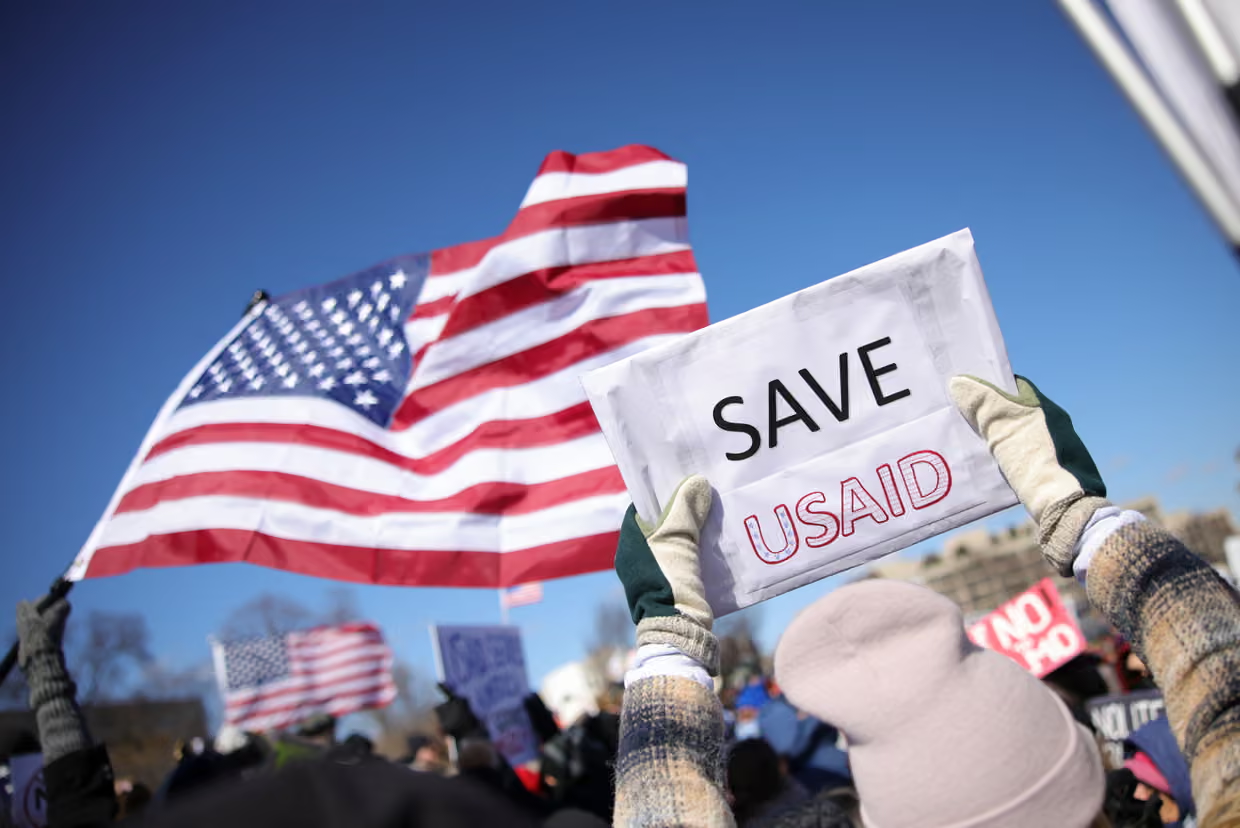
The administration has pursued broader reductions in international assistance, dismantling most of USAID, shifting its programs to the State Department, and attempting to halt health and humanitarian programs, including HIV/AIDS relief. An appeal is now before the Supreme Court to uphold those freezes after lower courts intervened.
Critics argue that these cuts save little compared to the federal deficit but risk significant damage to America’s reputation and global influence. Foreign aid programs often fund food security, health care, and development initiatives that impact vulnerable populations abroad.
The unusual use of the pocket rescission raises questions about whether future administrations could expand the practice, turning it from an obscure budget tactic into a way to reshape federal spending without Congress’s approval.




