As the 20th of April marks the feast day of Zacchaeus of Jericho, many recall the familiar biblical account of Zacchaeus climbing a tree to glimpse Jesus. However, the type of tree he climbed remains a point of contention, challenging long-held beliefs.
Encounter with Jesus
Zacchaeus, whose Greek name is the equivalent of the Jewish ‘Zaccai’, appears exclusively in Luke 19:1–10. This narrative, familiar to many from Sunday school teachings, unfolds as Jesus visits Jericho. Zacchaeus, a tax collector short in stature, climbs a tree to see Jesus, who in turn invites himself to Zacchaeus’s home. This act shocked many, as tax collectors were viewed as collaborators with the Romans and corrupt individuals. Yet, Zacchaeus repented, offering restitution beyond what he had taken unlawfully.
Eyewitness Details
The specific details in the story, including Zacchaeus’s name and the type of tree, suggest that Luke might have gathered this account directly from an eyewitness, possibly Zacchaeus himself or someone present during the event.
Jericho’s Historical Context
Located on the west bank of the River Jordan, Jericho is renowned as one of the world’s oldest continually inhabited settlements. Situated below sea level near the Dead Sea valley, it thrives as an oasis with a rich history of orchards featuring fig trees, date palms, and olive trees. Deuteronomy 34:3 refers to it as the ‘city of palms’, making Luke’s mention of the specific tree Zacchaeus climbed noteworthy.
The Tradition of Gathering Under Trees
Trees provided shade in the Middle East’s warm climate and served as gathering spots. The tradition of meeting under a tree is widespread across cultures. In England, the Tolpuddle Martyrs famously assembled under a sycamore tree in 1833 to discuss labor conditions. Similarly, in Jericho, locals gathered under a large tree within the town, which was not part of the cultivated orchards.
The Sycamore Tree Misconception
The term ‘sycamore’ historically applies to various trees with similar leaf forms, originating from the Greek συκόμορος (sūkomoros). However, the sycamore known in Britain, Acer pseudoplatanus, is not native to the Middle East. The American sycamore, Platanus occidentalis, and its relatives, also do not grow there. Thus, the tree Zacchaeus climbed was not what many imagine when they hear ‘sycamore’.
Fig Trees as the Correct Reference
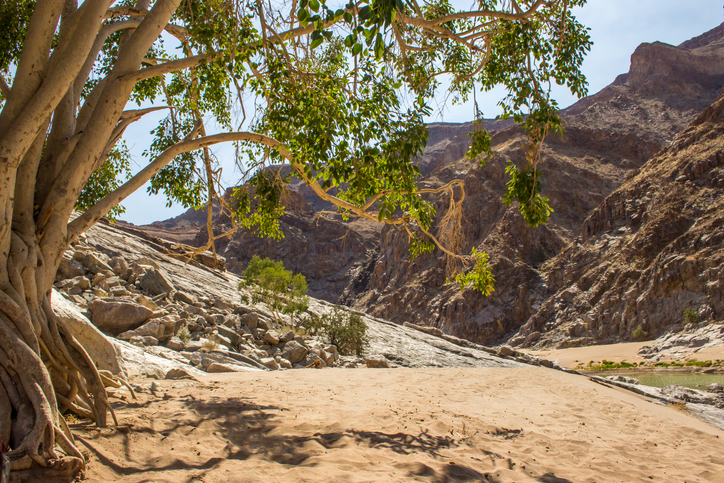
The tree Zacchaeus climbed was actually a type of fig tree, not a sycamore. The Bible mentions two types of fig trees. The cultivated fig, Ficus carica, known for its fruit, differs from the Ficus sycomorus, or sycomore-fig, valued for its wood. The latter, common in the Middle East, has a robust trunk, broad canopy, and low branches, making it accessible for a short man like Zacchaeus.
Jericho’s Living Tradition
In present-day Jericho, visitors can find a house traditionally associated with Zacchaeus and two trees considered to be the ones he climbed. Both trees are Ficus sycomorus, reflecting long-standing local beliefs about the type of tree mentioned in biblical accounts.
Translation Challenges
The reference to Zacchaeus’s tree appears only in Luke 19:4. Various Bible translations, such as the NKJV and NRSV, use “sycamore tree,” misleading contemporary readers. The King James Version established this tradition with its transliterations. Some modern translations, like the NIV and NLT, use “sycamore-fig” to better represent the original text. Interestingly, early English translations by William Tyndale referred to it as a “wilde fygge tree,” a term that aligns closely with recent scholarly understanding.
Despite the deep-rooted image of Zacchaeus in a sycamore, the actual tree was a wild fig, as evidenced by historical and linguistic analysis. This revelation highlights the importance of accurate biblical interpretation to avoid perpetuating misconceptions.
This article was originally written by www.christiantoday.com