Assistive Technology: A Lifeline for Students with Disabilities Amid Screen Time Debates
As debates about screen time in schools heat up across the United States, the conversation often overlooks a crucial segment of the student population: those with disabilities. For students like Soraya Martin, a ninth-grader from Concord, California, technology isn’t just a tool—it’s a lifeline.
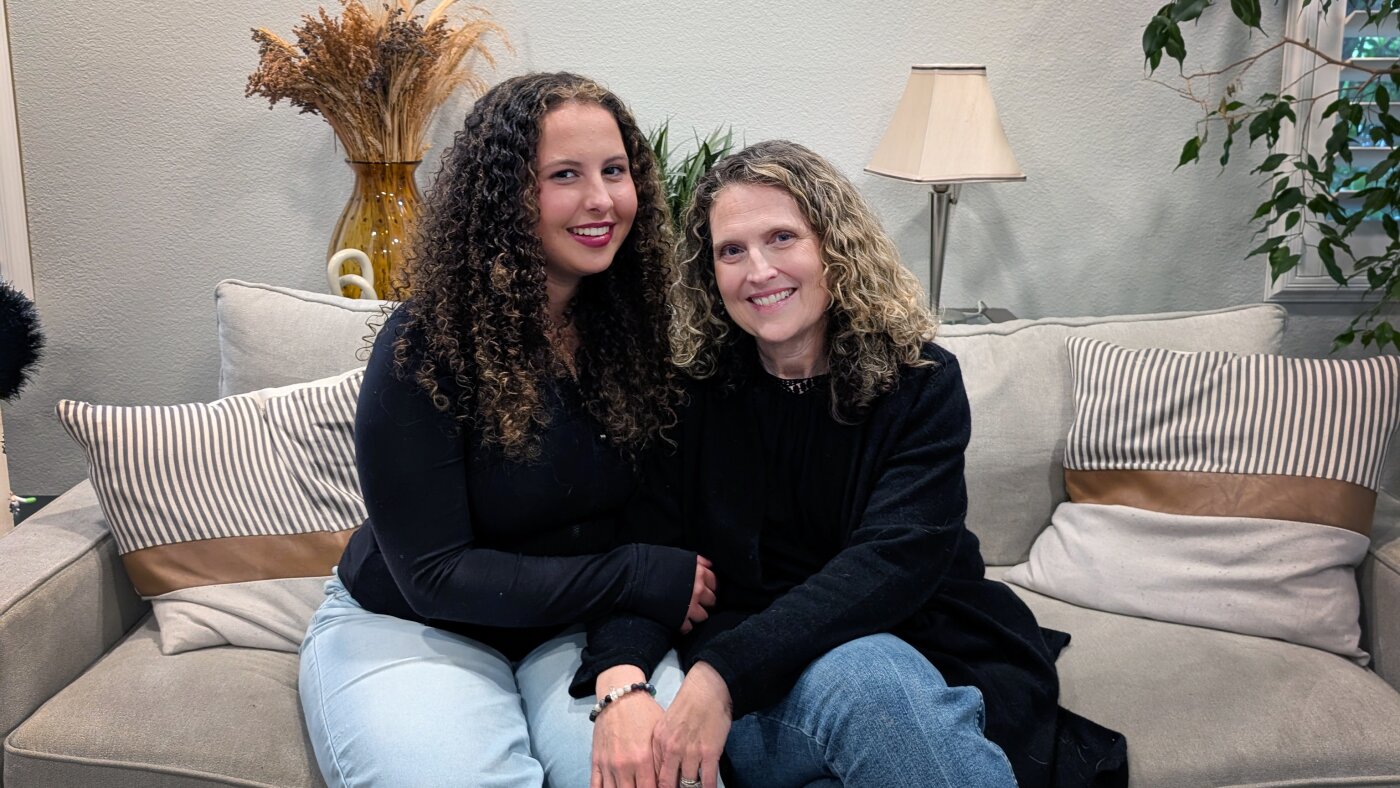
Soraya Martin (left) is a ninth grader in Concord, Calif., who has made strides as a creative writer and in her academics since she embraced assistive technology. She says her mom Heather Martin is her biggest advocate.
Jonaki Mehta/NPR
toggle caption
Jonaki Mehta/NPR
Soraya Martin, a vibrant ninth-grader, has discovered a newfound interest in creative writing. “I’m a very creative writer, I love to write stories for fun,” she shares. However, her journey in academics hasn’t been straightforward due to her struggle with dyslexia.
Despite the challenges, the introduction of assistive technology last school year marked a turning point for Soraya. This technology allows her to dictate her writings, listen to books, and capture classroom notes with ease. “I started getting really good grades,” Soraya notes, expressing how these tools have transformed her perception of her abilities.
Yet, as screen time policies tighten across the nation, Soraya’s mother, Heather Martin, fears for students like her daughter. With over 30 states implementing cellphone bans and proposals to eliminate screens in classrooms, Heather voices her concern: “Never once in the conversation has there been a discussion, except for me bringing it up with the other parents, about kids with disabilities.”
Assistive Technology: Essential for Many
The debate on screen time often bypasses the needs of over 8 million students who rely on assistive technology. For these students, tools like speech-to-text and audiobooks are crucial for learning. States such as Alabama, Tennessee, and Utah already have laws limiting screen use, sparking concerns among disability advocates.
Lindsay Jones, CEO of the Center for Applied Special Technology (CAST), critiques the rapid pace of these changes, noting that educators and communities are left to adapt hastily. “They’ve moved so fast that we’ve really left our educators and our communities of people with disabilities this summer to figure it out,” she remarks.
Moreover, the U.S. Department of Education’s diminished capacity to enforce civil rights, along with a delay in implementing digital accessibility rules, further complicates the issue.
The Role of Screens in Accessibility
At Soraya’s school, the recent implementation of a cellphone ban has stirred discomfort. Heather Martin worries this could lead to broader screen restrictions. “For some kids, the screen is their accessibility tool,” she argues, emphasizing the importance of technology in her daughter’s education.
Soraya’s individualized education program (IEP) permits the use of her phone for note-taking, but the recent ban makes it challenging to consistently implement. This situation highlights the potential “unintended consequences” of sweeping screen bans, warns Jones.
CAST’s framework, Universal Design for Learning, offers a solution by promoting diverse teaching methods to accommodate varied learning needs. Jones emphasizes the need for inclusive policy-making: “That is going to be the best way forward for everyone to achieve their goals without trampling on people’s rights.”
For Soraya, assistive technology has been transformative, allowing her to excel academically and express her thoughts more fully. “I have so much more to say … It made me feel more confident in myself,” she reflects.