Disney/Screenshot
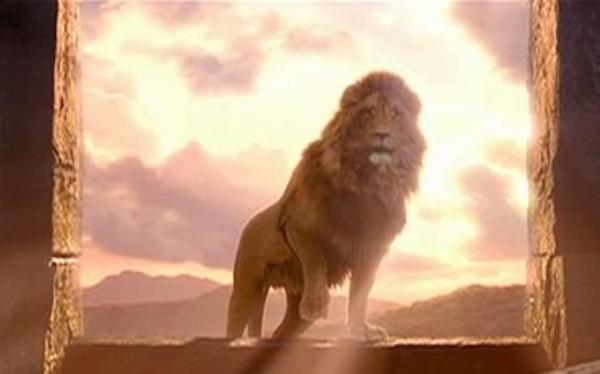
Meryl Streep’s upcoming portrayal of Aslan in Netflix’s adaptation of C.S. Lewis’ The Magician’s Nephew has sparked significant controversy. The decision has been met with criticism, particularly from those who view it as a deviation from the original Christian themes of the Narnia series.
Director Greta Gerwig shared her reasons for casting Streep, stating to Empire, “I wanted someone who was profound but not pretentious, who had gravitas but not morose self-seriousness. Someone who could communicate depth and pathos as well as joy and delight.” She emphasized her desire for an actor over 70 with a mix of wisdom and wonder. Gerwig, known for directing Barbie, plans to release the first film in the Narnia series next February.
The Magician’s Nephew, while not the first written, is chronologically the first in the Narnia series. It explores the creation of Narnia and introduces an evil witch, a narrative that lays the foundation for the entire saga.
Social media reactions, especially from Christians, have been largely negative. Some have mockingly dubbed the character “Translan,” suggesting the adaptation is an ideological attack on Christian values. Lutheran podcaster Liam McCollum criticized the move, stating Lewis “would’ve hated Gerwig’s deconstruction and subversion of Aslan.” He highlighted the irony in Lewis’s writing of a fake Aslan in The Last Battle.
“[Lewis] literally wrote about a similar moral affront – in Narnia,” McCollum remarked, citing a passage where King Tirian fears a counterfeit Aslan. He speculated that Gerwig’s Aslan would reflect modern cultural themes, potentially replacing Christian symbolism with secular messages.
Pastor L. David Fairchild expressed disdain on social media, labeling Streep’s casting as “astonishingly arrogant.” He criticized the decision as “creative vandalism,” suggesting it undermines the original work’s integrity and transforms it into an “ideological vanity project.”
Political commentator Isabel Brown also voiced disappointment, asserting that “Aslan is more than an allegory for Christ,” but rather an embodiment of Christ in Narnia. She argued that casting Streep was a deliberate affront to Lewis’s portrayal and Christian doctrine.
Lewis himself had clarified during his lifetime that Aslan was not merely allegorical but represented Christ as he might manifest in Narnia. When a concerned mother wrote to Lewis about her son’s affection for Aslan, he reassured her that loving Aslan was akin to loving Jesus, as Aslan’s actions mirrored those of Christ.
Gerwig’s background as a Unitarian Universalist influences her vision of the adaptation, which she describes as “a rock opera.” She has credited musicians like David Bowie and Paul McCartney as life-saving influences and sees Narnia as “a world sung to life by Aslan.”
In a 2018 interview, Gerwig mentioned feeling “uncomfortable around ‘Jesus Christ is my Lord and Savior stuff'” but noted regular church attendance. She appreciates prayers to the Virgin Mary, finding the concept of “God the Father” somewhat alienating.
This article was originally written by www.christiantoday.com