A Historic Call to Action in Montgomery Amid Modern Challenges
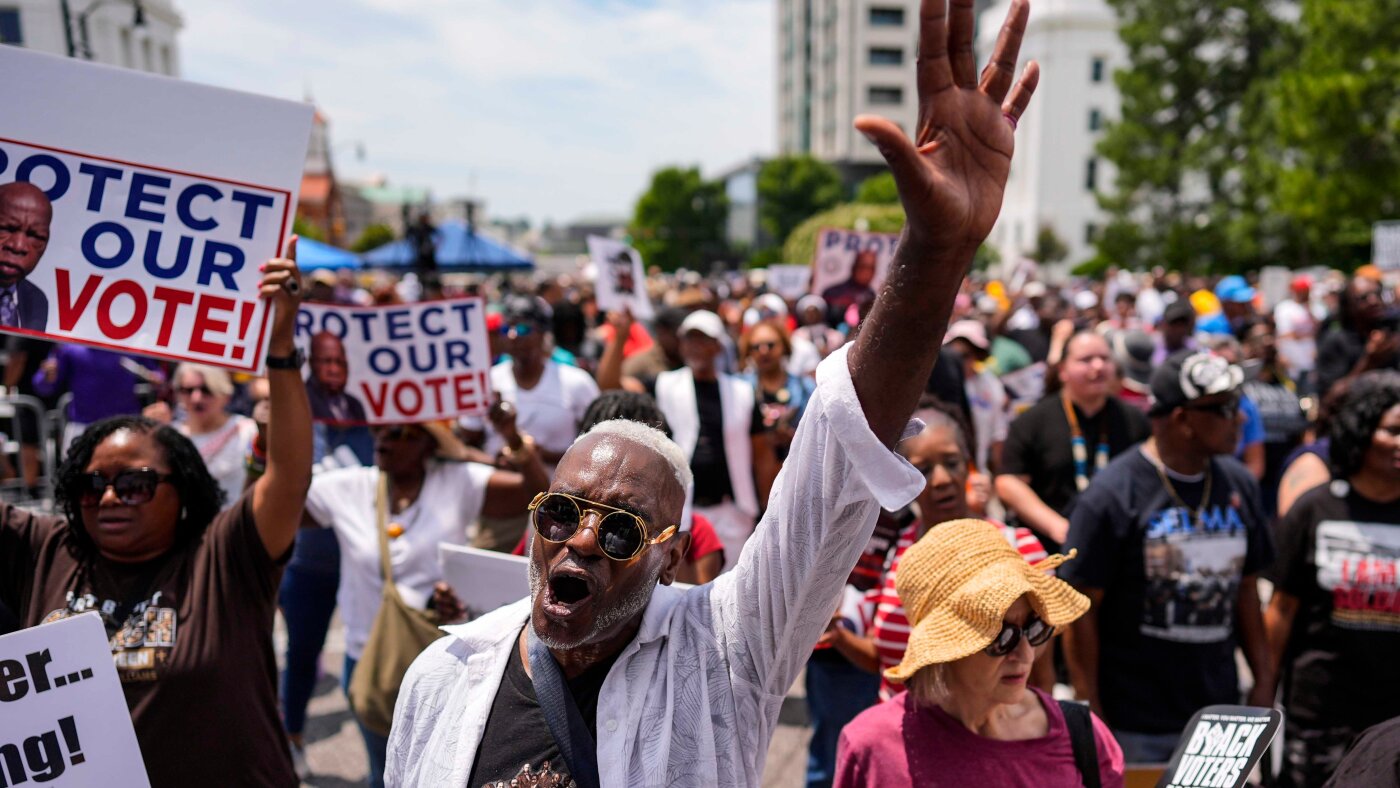
In a poignant echo of the past, activists recently gathered in Montgomery, Alabama, to rekindle the spirit of a pivotal civil rights march from 1965. This gathering comes in response to contemporary challenges threatening voting rights, reminiscent of the struggles from decades ago.
Keith Odom, a 62-year-old union worker from Aiken, South Carolina, was among those retracing the historic steps of the original marchers. He joined fellow activists in a bus journey from Atlanta to Montgomery, a symbolic act to highlight ongoing voting rights issues. “The history here — being a part of it, seeing it, feeling it,” Odom reflected, acknowledging the profound emotional impact of the experience.
The rally, termed “All Roads Lead to the South,” marked a significant response to a recent U.S. Supreme Court ruling. This decision, which invalidated a majority Black congressional district in Louisiana, has reignited debates about race and representation in electoral processes. Odom voiced concerns about the implications of such rulings: “I’m not trying to live a life that’s going backwards. I want to go forward, for my grandchildren to be able to go forward.”
Generational Voices Unite
Participants from diverse backgrounds and ages came together, each bringing their unique perspectives. Justice Washington, a university student, shared her grandmother’s excitement about the event, underscoring a legacy of civic involvement. “My grandmother told me she did her part, and now it’s time for me to do mine,” Washington stated.
The rally’s intergenerational nature highlighted the evolving struggle for civil rights. From young activists like Kobe Chernushin, who emphasized the “power of showing up,” to veterans like Darrin Owens, who drew parallels with past civil rights champions, the event underscored a shared commitment to advocacy.
The rally also served as a platform for candid discussions on racial integration and representation. Phi Nguyen, a civil rights lawyer, reflected on the cyclical nature of progress and backlash in America. “It feels like our country is stuck in this pattern of making progress, then there’s a huge backlash,” she noted, standing near landmarks that symbolize both the Confederacy and the civil rights movement.
Legacy and Future at a Crossroads
The rally illuminated the dual legacies of America’s civil rights journey, as exemplified by Odom’s reflections on historical figures like Strom Thurmond and Jim Clyburn. Odom expressed concern over potential political shifts that could undermine the representation gains made by figures like Clyburn.
Despite the challenges, the rally participants expressed a resilient hope for the future. Odom, reflecting on his conversations with younger generations, remains committed to sharing the stories and lessons of the past. “I’m still going to tell her what I saw and what I heard,” he concluded, emphasizing the importance of narrative continuity in the ongoing struggle for equality.