Armenia’s Alleged Campaign Against Church Sparks Concerns
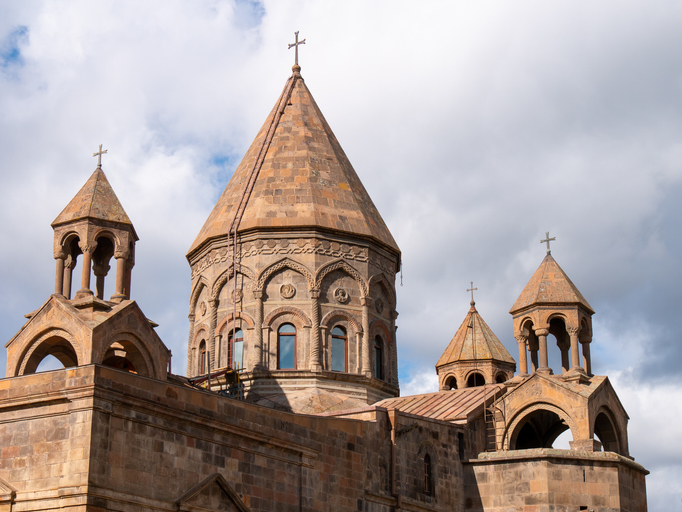
(Photo: Getty/iStock)
Amidst significant European diplomatic meetings in Yerevan, a report by Christian Solidarity International (CSI) casts a spotlight on Armenia’s government, alleging a systematic campaign against the Armenian Apostolic Holy Church (AAHC).
Compiled by Dr Peter Flew, an international lawyer and historian, the report highlights issues related to religious freedom and the rule of law. The document accuses Prime Minister Nikol Pashinyan’s administration of employing various tactics such as arrests and public attacks to exert control over the church.
CSI President Dr John Eibner criticizes the government’s use of “the coercive power of the state” and urges Western leaders to scrutinize the report carefully.
According to Dr Flew, the government is accused of undermining the Church’s autonomy through hostile rhetoric and legal actions against its members. Central to this conflict is Catholicos Karekin II, the spiritual leader of Armenians worldwide.
The report suggests that the ruling Civil Contract party aims to replace him and alter the Church’s governance, likening these efforts to a secular leader attempting to overthrow the Pope.
The document argues that such moves are part of a broader strategy that infringes on legal and constitutional norms, transforming internal religious issues into matters of state policy.
Allegations of public undermining of the Catholicos’ authority are detailed, including efforts to incite dissent among bishops and influence liturgical practices.
The report outlines instances of state interference, such as court decisions affecting church leadership and travel bans preventing participation in international religious events.
Legal criticisms are anchored in Armenia’s Constitution and the European Convention on Human Rights, emphasizing the need for state neutrality in religious affairs.
The church-state conflict is placed within the context of Armenia’s geopolitical struggles post-Nagorno-Karabakh wars, with Dr Eibner emphasizing the church’s historical role as a cornerstone of Armenian identity.
He asserts, “This national church kept the Armenian nation united for centuries when it was stateless,” further noting its resilience through historical adversities.
Accusations of the Church being portrayed as a national security threat are refuted, with the report denying claims of Russian influence and asserting a lack of evidence for foreign-directed activities.
Specific cases, such as the detention of Archbishop Bagrat Galstanyan and other clergy, are highlighted, alongside the plight of individuals facing travel restrictions or arrests.
The report references a British government statement acknowledging the situation and expecting Armenia to adhere to its legal commitments.
However, it suggests these acknowledgments insufficiently address the severity of the violations.
The document concludes that these actions collectively undermine church-state separation and violate the autonomy of the religious community, urging immediate action.
It calls on Armenian authorities to halt political assaults on the Church and appeals to Western governments to link deeper ties with Armenia to improvements in religious freedom and human rights.
This article was originally written by www.christiantoday.com