
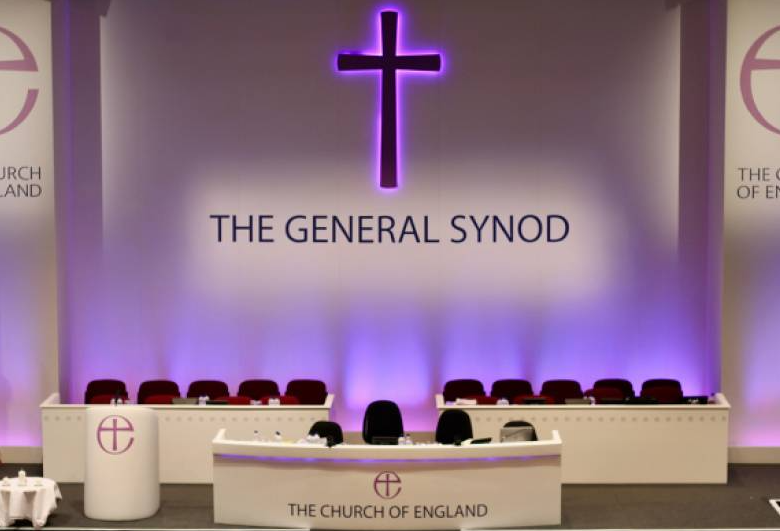
In a contentious move, the Church of England’s General Synod is preparing to discuss a motion to officially acknowledge the “Kairos Palestine II” document. This document, a statement by Palestinian Christians on the Israeli-Palestinian conflict, has sparked significant debate and criticism.
The document is under scrutiny for its bold assertion: “The genocidal war on Gaza is the continuation of the Zionist project to seize all of Palestine, emptied of its Palestinian people.” Such statements have drawn sharp rebuke from Jewish leaders and some theologians.
Proponents of the motion aim for solidarity with Palestinian Christians, advocating a stance of non-violent resistance against Israeli occupation. The motion also emphasizes opposition to antisemitism and anti-Muslim sentiment, while mourning the casualties on both sides of the conflict.
Sir Ephraim Mirvis, the Chief Rabbi of Britain, has voiced strong objections, describing the document as biased and dismissive of Jewish historical narratives. He warned that it could unravel years of progress in Christian-Jewish relations.
Sir Ephraim stated: “The content of Kairos II is deeply concerning and I would hope the Synod will see it for what it is. While it is important to recognise the suffering of Palestinian Christians, this document does so in a way which can only harm the cause of peace.”
He further criticized it as “political activism dressed up as theology” and highlighted the potential damage to interfaith dialogue.
The Board of Deputies of British Jews has also opposed the document, describing its central claim about Zionism as false and harmful. The Board cautioned that endorsing the document could exacerbate tensions and undermine Jewish-Christian relations.
“If this motion is implemented, it will have immediate harmful consequences for British Jews and do potentially lasting harm to Jewish-Christian relations,” it stated.
The Board argued that the document’s narrative contributes to antisemitic rhetoric, particularly during a time of increased tensions and violence.
Ian Paul, a theologian, expressed reservations about the motion’s implication that Palestinians are wholly committed to non-violent resistance. He noted the historical involvement of some Palestinian Christians in violent groups.
Paul criticized the use of terms like ‘genocide’ in the document, calling it an offensive misrepresentation and highlighting its potential to damage Christian-Jewish relations further.
The Churches Ministry Amongst the Jews (CMJ) questioned the lack of diverse Christian perspectives in the discussion and warned that this might hinder relations between Jews and Christians.
“We therefore believe it is important that the resources commended to the Church reflect the breadth of faithful Christian concern on these questions,” the CMJ stated.
Narratives such as Kairos II have been labeled by some commentators as modern antisemitic propaganda, with concerns that endorsing it could undermine progress in apologizing for historical Christian anti-Semitism.
In response, a Church of England spokesperson noted: “A motion relating to Palestinian Christians is being brought to the General Synod following a vote at the Carlisle Diocesan Synod (first in 2021 and revised in 2025).” While they refrained from commenting on the motion’s merits, they highlighted the importance of understanding antisemitism and anti-Muslim hostility in the context of the debate.
This article was originally written by www.christiantoday.com




