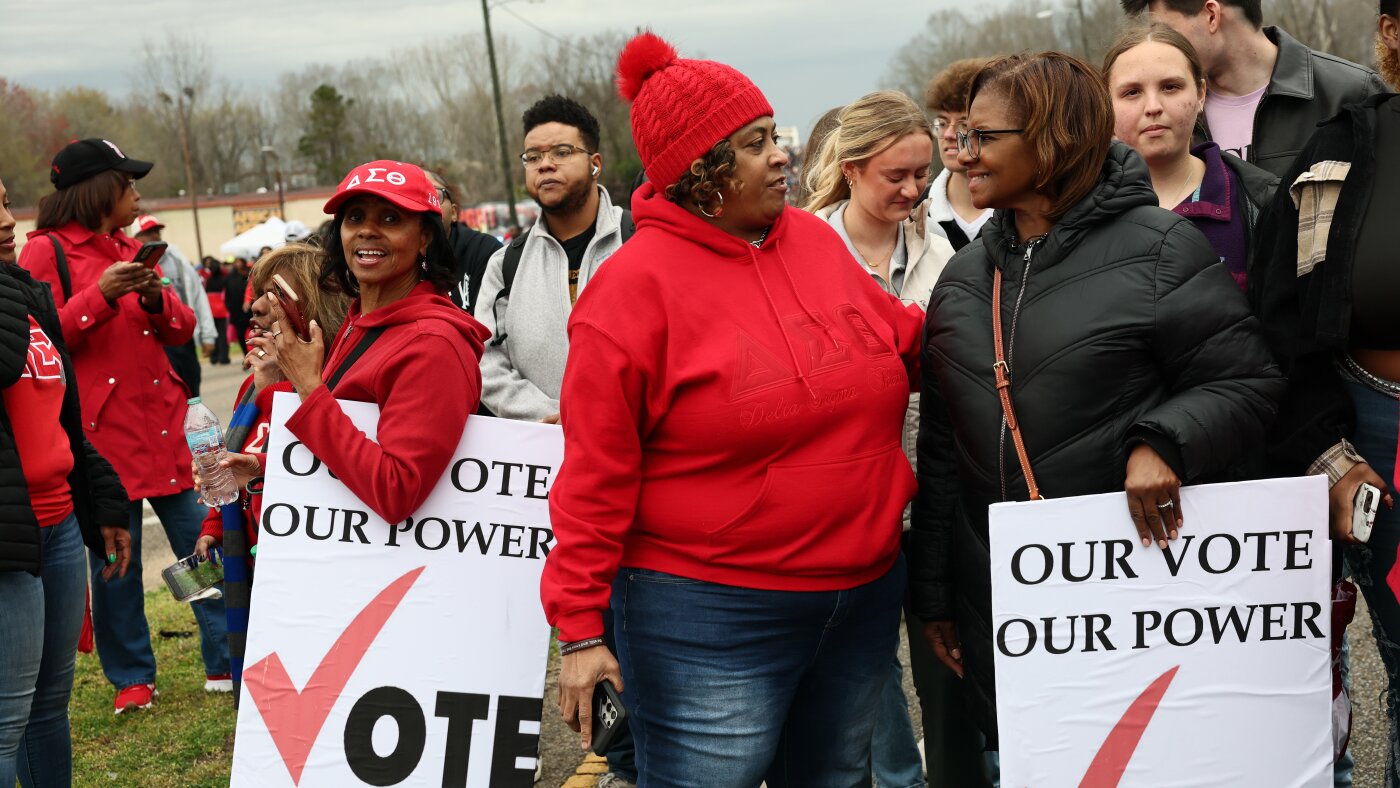
The Supreme Court Decision’s Ripple Effect on Local Redistricting
The recent Supreme Court decision has set off a chain reaction across Republican-led Southern states, prompting them to revise their congressional maps. This move comes in the wake of a landmark ruling that diminishes the Voting Rights Act’s protections against racial discrimination, with significant implications at the local level.
An analysis by NPR reveals that more than 17 voting maps or election systems are currently embroiled in legal battles as state and local governments grapple with the court’s decision. Following the court’s ruling in Louisiana v. Callais, attorneys have been busy preparing briefs to interpret the new guidelines under the Voting Rights Act’s Section 2 concerning redistricting.
Legal Challenges Across the Nation
The Supreme Court’s conservative majority has shifted the focus of Section 2 to intentional racial discrimination, a challenging standard to establish legally. This shift has raised concerns among legal experts about the potential erosion of minority representation and the incentivization of partisan gerrymandering.
Already, this decision has influenced ongoing legal cases, notably leading to the withdrawal of a lawsuit challenging North Carolina’s Senate map. State Rep. Rodney Pierce expressed dismay over the Supreme Court’s decision, stating it rendered the Voting Rights Act ineffective for protecting Black citizens’ voting rights.
While many of these legal wrangles are concentrated in the South, similar challenges have emerged elsewhere. Latino voters are contesting Washington’s state legislative map, while Native American voters are challenging North Dakota’s legislative map. These cases now face heightened scrutiny under the Supreme Court’s new standards.
Complexities in Local Redistricting
Historically, Section 2 cases have focused on municipal governments, where it’s often feasible to draw districts that allow minority voters to elect their preferred candidates. According to Michael Li from the Brennan Center for Justice, this ruling jeopardizes the progress made in breaking down political strongholds in the South.
The court’s decision comes seven years after ruling that partisan gerrymandering is not subject to federal court review. Li warns that this may lead opponents of local majority-minority districts to assert political motives in redistricting, even for nonpartisan bodies like school boards.
Potential Resurgence of At-Large Voting Systems
The Supreme Court’s ruling introduces a new challenge for those contesting voting maps under Section 2. Proving racial polarization now requires distinguishing race from partisan preference, a difficult task without local-level partisan data.
Under the Trump administration, the Justice Department shifted away from enforcing voting rights for racial minorities. This shift, coupled with the Supreme Court’s decision, may encourage local governments to dismantle voting districts aligned with Section 2.
Maureen Edobor, an assistant law professor, highlights that moving to at-large voting systems could undermine minority representation, as the majority population could potentially win all seats.
Anticipating Further Redistricting Struggles
In Tennessee’s Fayette County, local NAACP president Elton Holmes remains vigilant. Although a new voting map has been implemented, Holmes fears potential backlash from white county commissioners if the elections do not favor them.
Advocacy groups estimate that approximately 200 Democratic-held state legislative seats, mainly in majority-Black Southern districts, are at risk due to the weakened Voting Rights Act.
Future Supreme Court decisions could further alter redistricting landscapes, depending on the outcome of pending cases that may further weaken the enforcement of the Voting Rights Act.