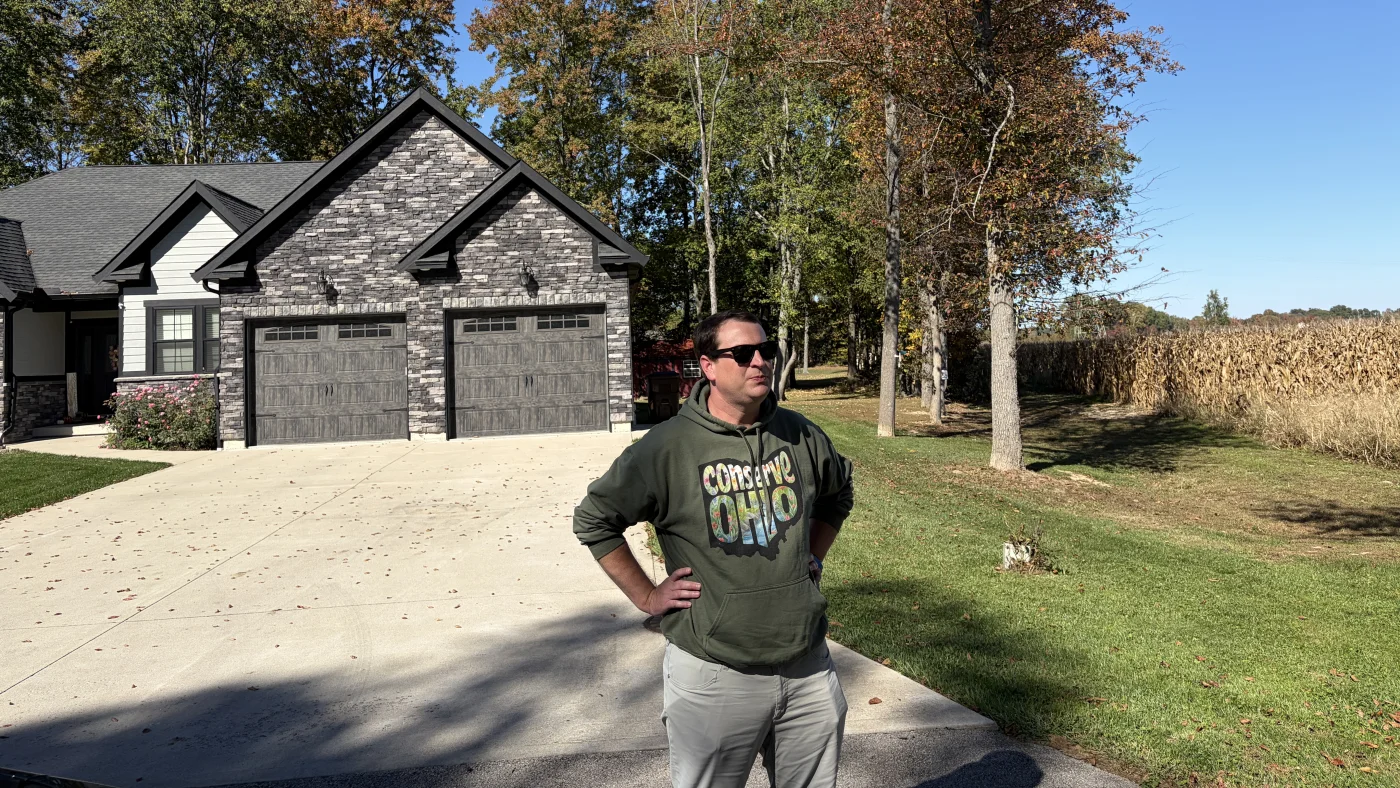
In the quiet rural town of Mt. Orab, Ohio, a burgeoning conflict over data centers is stirring the community. Leading the charge is Nick Owens, a dedicated attorney and lifelong resident, determined to uncover the mystery surrounding 1,000 acres of farmland sold to a data center developer. Amidst the beauty of two-story homes and sprawling fields, Owens and a coalition of like-minded locals are questioning the future of their small-town charm.
Owens, a self-proclaimed small-town lawyer and Republican, has immersed himself in the details of the land sale, frustrated by nondisclosure agreements that cloud transparency. The land, earmarked for data center development, has sparked concerns about the possible disruption to the community’s serene environment.
“This is the Ohio that people brag about. This is the Ohio people love,” Owens remarks, highlighting the region’s allure for its blend of rural living and neighborhood benefits. Yet, as whispers of data center expansion circulate, a grassroots movement is gaining momentum.
Forming the group Conserve Ohio, Owens joined forces with other concerned citizens, transcending political lines to rally for their cause. The movement, which spans nearly all of Ohio’s 88 counties, includes Democrats, Republicans, and Independents united in their effort to preserve their way of life against what they refer to as the “hyperscale data center invasion.”
As part of their campaign, Conserve Ohio is pushing for ballot initiatives in 10 communities, aiming to amend local charters to prohibit the establishment of large-scale data centers, particularly those powering artificial intelligence. This initiative seeks to provide communities with a say in their future, beyond the temporary pauses many local governments have enacted.
Moreover, the group is ambitiously pursuing a constitutional amendment to ban large-scale data centers statewide, with hopes of bringing it to a vote in 2027.
Data Centers: Economic Boon or Burden?
Ohio’s appeal as a tech hub is undeniable, with its affordable land, robust energy infrastructure, and generous tax incentives fostering rapid data center growth over the past decade. Despite the economic benefits, including increased tax revenue and job creation, resistance to these developments is strong, especially when shrouded in secrecy.
“Should the school have extra money or the local government have extra money so we have a constant hum and ridiculous amounts of emissions and pollution?” Owens questions, emphasizing that hyperscale data centers demand new power plants. He suggests that old industrial sites, rather than pristine farmland, should be prioritized for such developments.
Political Implications in Ohio
The debate over data centers has permeated Ohio’s political landscape, influencing election campaigns and voter sentiments. Former Democratic Senator Sherrod Brown has criticized his opponent, incumbent Republican Senator Jon Husted, for his previous support of tech companies and data center investments. Meanwhile, Husted has proposed legislation to make data centers accountable for power grid upgrades, though Senate Democrats have blocked it as ineffective.
Linda Moodie, an independent and volunteer with Conserve Ohio, remains skeptical of political promises. “It’s really something that I think a lot of us didn’t see coming, and all of a sudden there’s just an influx of them,” she remarks, dedicating her efforts to gathering signatures for a statewide ban on data centers.
While the political discourse intensifies, Owens notes a shift in Republican enthusiasm in rural areas, partly due to President Trump’s dismissive comments on data center opposition. As the community braces for potential changes, Owens stands firm in his commitment to preserving Mt. Orab’s tranquility.
For now, the future of data centers in this Ohio town remains uncertain, with the community’s voice poised to play a pivotal role in shaping what’s to come.