(Photo: Christian Legal Centre)
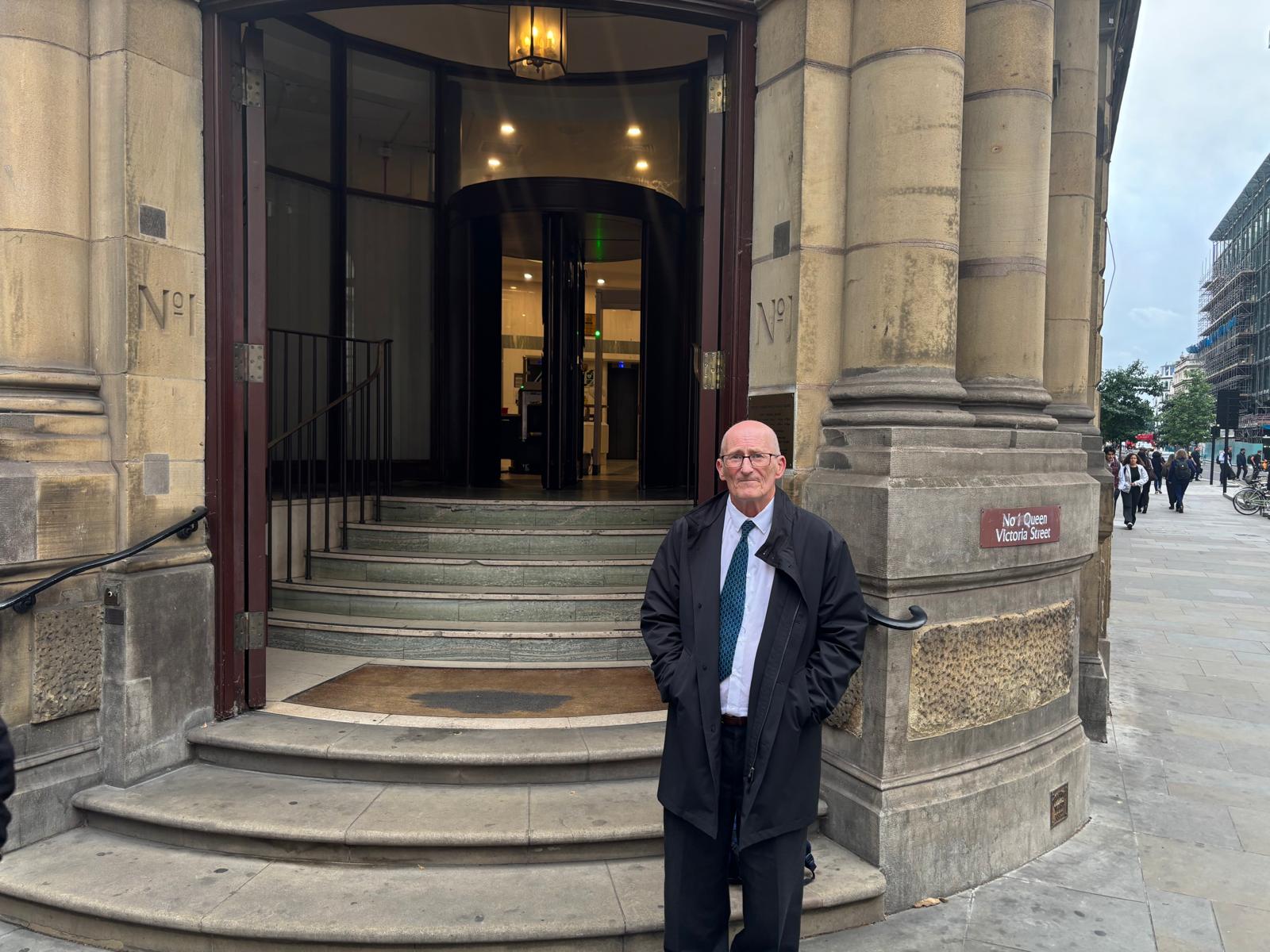
In a significant development for free speech advocates, 72-year-old Christian evangelist Richard Johnson has been acquitted by a court after facing prosecution for distributing a Gospel tract in Soho. This decision brings relief to Johnson, who has been under the shadow of a criminal conviction for nearly two years due to his peaceful expression of Christian beliefs.
The case raises important questions about how a Christian evangelist, simply sharing religious literature on the streets of London, ended up in court. This situation challenges the cherished British principle of free speech, which includes the freedom to openly express one’s faith, regardless of its popularity.
The controversy centered on the notion that Soho, known as a hub for LGBTQ life, somehow alters the landscape of free speech. The prosecution highlighted that Johnson distributed Christian teachings on marriage and sexual morality in this specific area, which one complainant described as a “safe space” for LGBTQ individuals.
This implication suggests a troubling precedent—that certain beliefs may be expressed in some areas, but are unwelcome in others. However, Soho, like any part of London, remains a public space where diverse viewpoints should coexist.
Restricting speech based on geographical or cultural lines risks creating territorial claims for specific worldviews, potentially leading to ideological segregation. Would it then be possible for other communities to exclude differing beliefs? Such practices contradict the essence of a free society.
In a genuinely free society, individuals with differing beliefs should be able to share their ideas in public spaces, even when those ideas are unpopular. The Christian faith, by nature, is public, rooted in teachings that urge followers to share their message openly, as exemplified by Jesus’ instruction to “go and make disciples of all nations.”
The magistrates in Johnson’s case concluded that handing out a Gospel tract did not meet the threshold for criminal behavior. This distinction between causing offense and committing a crime is crucial to maintaining a free society. Various teachings—be they Christian, Islamic, or secular—may offend, but the response should be open dialogue, not legal action.
The notion of “safe spaces” on public streets becomes problematic when it suppresses differing views. There is no inherent right to avoid encountering opposing beliefs, as the European Convention on Human Rights protects both religious freedom and freedom of expression.
The implications of Johnson’s case extend beyond Soho, touching on similar issues like buffer zones around abortion facilities. Both scenarios involve restricting speech based on perceived discomfort, leading to censorship zones in public areas.
Although Johnson’s acquittal is a victory for free speech, it also highlights the ordeal faced by individuals who confront legal challenges for expressing their beliefs. The prosecution’s appropriateness remains in question, as true freedom of expression should thrive even in the face of controversy, ensuring that all parts of London remain open to diverse voices.
This article was originally written by www.christiantoday.com