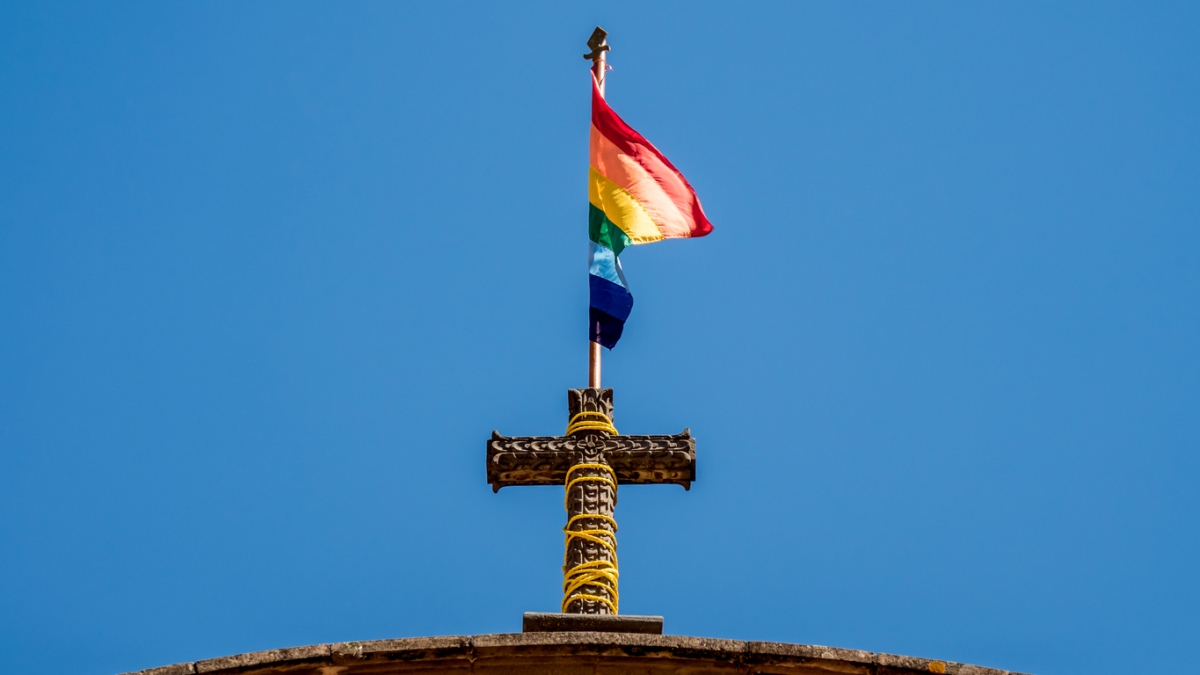
A pivotal moment approaches for the Church of England as it gears up for the election of a new General Synod this autumn, set to be inaugurated by the King in November. Foremost on its agenda is addressing the unfinished business of marriage and human sexuality, issues that have lingered since past discussions.
Canon Vaughan Roberts, in a recent speech, highlighted the core challenge that lies ahead: the Synod’s struggle to reconcile divergent views on same-sex relationships. Roberts voiced his opposition to a motion put forth by Professor Helen King, which suggested that committed same-sex relationships could align with Christian discipleship. Despite amendments, the motion narrowly failed in the House of Bishops by three votes.
Roberts asserted, “These are first order issues on both sides of these debates. We do not agree. We will not agree. And we will not meet in the middle. And it will not be possible to affirm both – because in affirming one you are not going to affirm the other. In affirming one kind of lifestyle you are not going to affirm my kind of lifestyle. You will deeply discourage me. Let’s face reality – this amended motion attempts to affirm everyone – but let’s face reality. We will not make progress in the next quinquennium unless we recognise we can’t do that.”
The question arises: how can the Synod progress while acknowledging the fundamentally opposed positions within the Church? A potential solution lies in creating a framework that satisfies both parties.
The liberal faction within the Church seeks to perform same-sex marriages and ordain individuals in same-sex relationships. Conversely, conservatives like Roberts desire either the cessation of such developments or, at minimum, the retention of blessings for same-sex couples if changes proceed. They propose six essential needs to maintain their integrity within the Church:
Need 1 calls for permanent, legally enforceable provisions supporting the historic orthodox stance on human sexuality as outlined in biblical scripture, early Church teachings, and Anglican tradition.
Need 2 emphasizes the necessity for clergy and laity to operate under the jurisdiction of an orthodox diocesan bishop who adheres to these principles.
Need 3 advocates for the establishment of dioceses committed to these principles, ensuring a supportive network for orthodox parishes and clergy.
Need 4 seeks perpetual access to church buildings and assets for parishes and BMOs upholding orthodox beliefs, enabling their continued mission and ministry.
Need 5 focuses on the training and ordination of clergy aligned with orthodox views, ensuring a steady supply of ministers for orthodox congregations.
Need 6 guarantees that only candidates supporting orthodox principles are considered for clerical positions, allowing parishes a veto in the selection process.
A third province for conservatives within the Church of England could be the answer, functioning alongside the provinces of Canterbury and York. This new province would be established through Synod legislation and an Order in Council, with mechanisms to prevent its repeal without provincial consent.
Parishes could opt to join this new province, which would initially consist of dioceses based on geographical regions. Each diocese would have a bishop, with one serving as the archbishop. The province’s doctrine, law, and liturgy would reflect traditional Anglican teachings, excluding support for same-sex relationships and gender transition.
Under this arrangement, clergy would remain eligible for roles as Anglican chaplains, and the province would maintain ties with global Anglican communities opposed to same-sex marriage or ordination.
The creation of this province would allow both liberal and conservative factions to pursue their visions within the Church, sustaining unity by keeping all parties under the Church of England’s umbrella without forcing anyone to leave.
This article was originally written by www.christiantoday.com